CAREER GUIDE
Dr. Renu Oberoi
13-11-2025

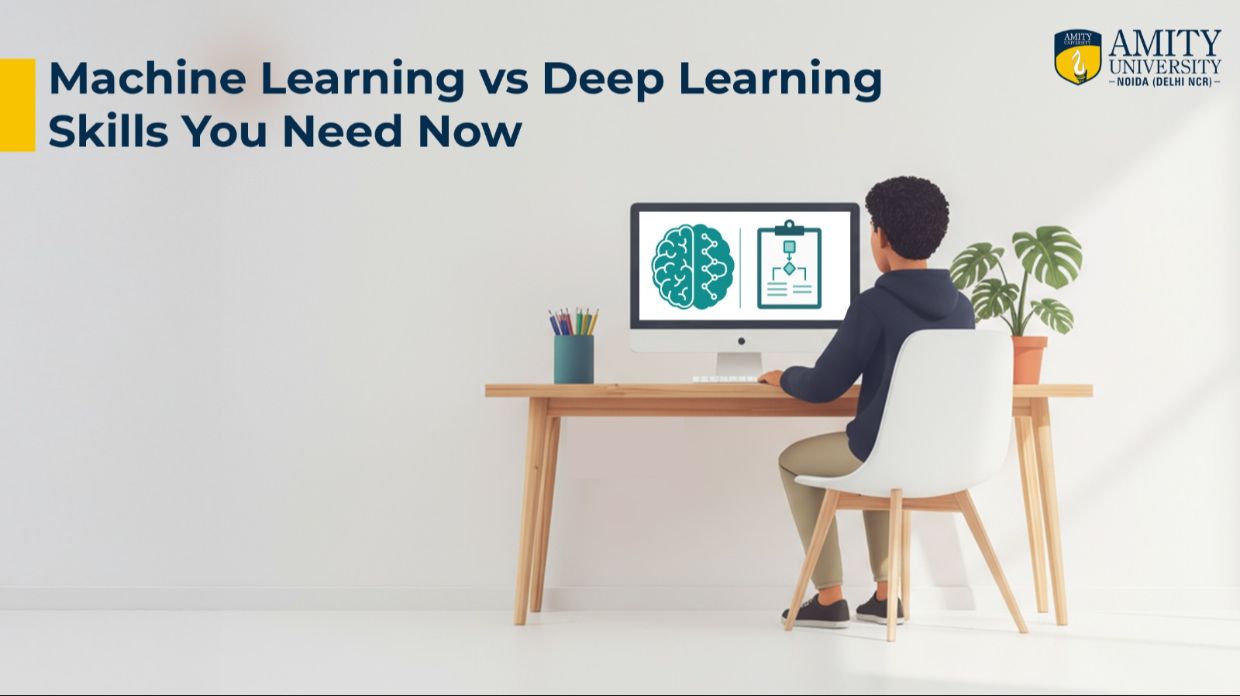
What if the power to predict stock markets, drive cars without drivers, or make machines talk like humans was right at your fingertips? It’s happening. Machine learning and deep learning are the superheroes behind some of the most exciting innovations of our time. From robotics and healthcare to entertainment and e-commerce, these technologies are transforming the way industries function and how jobs evolve.

The numbers prove it. The machine learning market is expected to reach $209.91 billion by 2029, while the broader AI market (which includes ML and DL) may reach $1.59 trillion by 2030. This isn’t just progress. It’s a revolution shaping the future of work.

What Is Machine Learning?

Machine learning is the science of making machines smarter by feeding them data instead of commands. If you’ve ever wondered what machine learning is, think of it as teaching a computer to recognise faces in a photo album or recommend the next product you might want to buy.

By analysing patterns, spotting trends, and predicting outcomes, ML makes systems more adaptive and intelligent, playing a key role in data science machine learning and modern automation.

Why Does Machine Learning Matter?

In a world overflowing with data, ML helps industries stay afloat instead of sinking. Finance depends on ML for fraud detection and stock predictions. Healthcare uses it for early diagnosis. E-commerce uses it for personalised shopping. Education uses it for smart learning platforms.

McKinsey reports that sales and marketing are the most profitable domains for ML. It’s no surprise that 80% of ML-driven companies prioritise retail and e-commerce. Strong machine learning tools and frameworks make this growth possible.

Top Skills for Machine Learning

  • Cloud computing and Big Data

  • Strong mathematics and statistics

  • Programming skills like Python, R, and Java

  • Knowledge of Natural Language Processing (NLP)

  • Understanding of AI vs machine learning vs deep learning fundamentals

Career Paths in Machine Learning

  • Machine Learning Engineer: A machine learning engineer builds algorithms to solve real-world problems. They work across industries, handling data pipelines, automation, and model optimisation as part of a fast-growing machine learning career.

  • Data Scientist: A data scientist cleans, organises, and interprets data. They combine ML algorithms, domain knowledge, and storytelling to turn data into strategy.

  • AI Research Scientist: These experts explore new algorithms, model architectures, and innovations that push technology forward.

  • Business Intelligence Developer: BI developers translate large datasets into business strategies, enabling organisations to make informed decisions.

What Is Deep Learning?

If ML is smart, deep learning is genius. If you’ve ever wondered what is deep learning, think of it as a more advanced version of ML that mimics the way the human brain works. Deep learning uses neural networks to process massive datasets and recognise patterns with incredible accuracy.

DL powers voice assistants, facial recognition, chatbots, and autonomous cars, high-impact deep learning applications that shape modern AI.

Why Does Deep Learning Matter?

Deep learning takes machine intelligence much further by thinking in layers. It:

  • Detects diseases using medical imaging

  • Powers autonomous vehicles

  • Creates advanced recommendation engines

  • Enables real-time language translation

It doesn’t just learn. It reasons and adapts, making it crucial for future AI systems.

Top Skills for Deep Learning

  • Strong knowledge of AI and applied mathematics

  • Mastery of DL frameworks like TensorFlow and PyTorch

  • Data handling and visualisation

  • Programming expertise for building scalable models

  • Understanding the relationship between machine learning vs deep learning

Career Paths in Deep Learning

  • Computer Vision Engineer: Teaches machines to understand images and videos.

  • Deep Learning Engineer: A deep learning engineer designs and maintains advanced neural networks for automation, perception, and prediction.

  • NLP Engineer: Builds models that help machines understand and generate human language.

ML vs DL: Future Trends

  • Generative AI: Revolutionising creativity through AI-generated content.

  • Federated Learning: Protects user privacy by training models without sharing raw data.

  • Explainable AI: Makes model decisions transparent and trustworthy.

Understanding AI in the Amity Universe

At Amity, the future of AI isn’t a distant goal, it’s a lived reality. Students explore hands-on ML and DL projects using cutting-edge infrastructure.

  • Ticket to the World Stage: Global internships and research projects with leading industry giants across the US, UK, and more.

  • Toolkit for an AI Hero: Industry-live projects that sharpen problem-solving, communication, and analytical skills.

  • Innovation Playground: AI labs equipped with globally competitive machines and tools to foster teamwork, leadership, and creativity.

  • Placements That Speak for Themselves: With multi-crore packages and placements in Fortune 500 companies, Amity sets the bar high year after year.

Conclusion

Machine learning and deep learning aren’t just technologies, they’re catalysts shaping the future of AI. From personalised healthcare to autonomous systems, the impact of ML and DL is limitless. The only question now is simple:

Are you ready to ride the AI wave and shape the future?

FAQs

1. What is machine learning in simple words?

Machine learning is a method of teaching computers to learn patterns and make predictions using data instead of explicit instructions.

2. What is deep learning and how is it different from ML?

Deep learning is an advanced form of machine learning that uses neural networks to learn from large datasets. It handles complex tasks like speech recognition and autonomous driving.

3. Which career is better: machine learning or deep learning?

Both careers have a strong demand. ML roles are broader across industries, while DL roles specialise in computer vision, NLP, robotics, and large-scale automation.

4. What skills do I need for a machine learning career?

You need programming skills, mathematics, statistics, cloud computing knowledge, and an understanding of ML tools and data pipelines.

5. What are the top deep learning applications today?

Deep learning powers self-driving cars, medical image analysis, chatbots, virtual assistants, facial recognition, and generative AI models.

Dr. Ankur Verma
11-11-2025

The world of computer science is rapidly evolving, driven by technologies like Quantum Computing, Generative AI, and 5G. These innovations are transforming how we work, live, and communicate. Approximately 90% of the world’s data was created in the last two years, thanks to the explosion of IoT, social media, and cloud computing. This reality has strengthened global demand for data science, data engineering, and advanced computer science skills.

This growth has made a Bachelor of Technology in Computer Science Engineering (BTech CSE) a game-changer for young professionals and industries alike. A modern computer science degree now offers a strong foundation in everything from AR/VR and cybersecurity to robotics, cloud computing, and the future of computer science.

Why BTech CSE Is the “New Cool”

BTech CSE degree is a gateway to diverse and high-demand career paths within both computer science career and data science career segments. According to the McKinsey India Skills Report 2025, BTech graduates in India have a promising future due to rapid economic and technological advancements.

  • High Employability: Indian BTech graduates have an impressive employability rate of 71.5%, demonstrating their readiness to meet industry expectations through strong computer science education and analytical skills.

  • Technological Disruption: Indian employers are outpacing global adoption of certain technologies, with 35% believing semiconductors and computing will transform their operations, and 21% seeing quantum computing and encryption as key catalysts for change.

  • Innovation: Computer science is the backbone of innovations like robotic surgeries, AI diagnostics, climate monitoring tools, and scalable data engineering solutions.

  • In-demand Skills: A BTech CSE curriculum fosters critical workplace skills like communication, decision-making, critical thinking, and resilience skills that support both data science education and computer science career success.

Decoding Top Data Science Careers

The field of data science is projected to create 97 million new jobs by 2025. With a strong base in computer science vs data science, here are some of the top career paths you can pursue:

  • Data Scientist: Data Scientists are experts in numbers and storytelling. They work with machine learning, algorithms, and programming languages like Python and SQL to extract insights from complex datasets.

  • Quantitative Analyst: Quantitative Analysts use expertise in finance, economics, and computer science to guide risk management decisions. They use Python, R, and MATLAB and rely heavily on data science skills.

  • Business Intelligence Analyst: BI Analysts collect and analyse data to support business decisions. They require statistical knowledge and familiarity with tools such as Power BI and strong computer science skills.

  • Data Architect: Data Architects design the core data infrastructure of an organisation. This requires advanced skills in data modelling, database design, and a deep understanding of data science principles.

  • Generative AI Specialist: This role focuses on developing AI models for content generation and business automation. It requires expertise in machine learning, NLP, deep learning, and a strong data science education.

The Amity Advantage

At Amity, the ecosystem is designed to help students grow into creative problem-solvers and pattern decoders.

  • Ticket to the World Stage: Amity offers internships with top global companies and research projects in India and abroad, including the United States and the UK. These opportunities strengthen both computer science skills and data science skills.

  • Toolkit for a Byte Hero: Through industry-live projects, students develop a design thinking mindset and sharpen critical workplace skills like empathy, communication, teamwork, and a positive approach.

  • Innovation Playground: Amity’s labs are equipped with globally competitive technology, enabling students to develop leadership, teamwork, and risk management skills along with advanced computer science and data engineering capabilities.

  • Placements: Amity achieves new placement records each year, with students securing packages up to Rs 2 crore and placements in 500+ corporates, including Fortune 500 companies.

Conclusion

Computer science and data science are fast-growing fields that demand continuous learning and upskilling. It’s not just about number crunching but it’s about developing real-world solutions, building innovative systems, and unlocking high-paying careers. Whether you pursue a computer science degree or a data science degree, the sky is the limit with a BTech CSE.

FAQs

1. What is the difference between computer science and data science?

Computer science focuses on software, algorithms, operating systems, and computing systems, while data science focuses on analysing data using statistics, machine learning, and programming. Both fields complement each other and support strong career growth.

2. What careers can I pursue with a background in computer science and data science?

You can become a data scientist, quantitative analyst, BI analyst, data architect, AI specialist, robotics engineer, or data engineer. These roles are growing rapidly.

3. What skills are essential for a data science career?

Essential skills include programming languages like Python and SQL, statistics, data visualisation, data engineering, machine learning, problem-solving, and communication skills.

4. Is a computer science degree good for the future?

Yes, the future of computer science is bright, with rising demand for software engineers, AI professionals, cybersecurity experts, data scientists, and cloud specialists.

5. How does a BTech CSE help students build strong career foundations?

BTech CSE helps students build core computer science skills, programming expertise, analytical thinking, and hands-on experience with industry projects, internships, and global exposure.

Dr. Vinay Rattan
08-11-2025

These days, your social media profile is a combination of red carpet and a TED Talk. If your Insta feed is about memes, questionable posts and reels, it’s time for a clean-up. As many as 73% recruiters have dropped potential hires because of their poor online etiquette. So ensuing a fantastic social media branding is the launchpad to your future.

Social Media Branding: The Real You

Your social media account –YouTube, TikTok, Instagram—is partially a resume and a reality show. This digital aura indicates whether you’re a suitable fit for the culture. This is inferred from your posts, memes and even photographs. But that doesn’t mean that you stop having fun. It’s just about making the right choices that reflect the real you without going over the top.

Impact

1. Visual Content- This is a window into your inner world, and if you leverage short-form video, especially about your areas of interest, industry or sector, then you’re likely to attract more attention from prospective employers.
2. No account- You may be a person valuing privacy, but in today’s world, no social media presence can be taken as a negative. It sort of blocks an employer’s insights into you.
3. Projecting Projects- Any college work which could be an extra-curricular activity, a project, or a short internship opportunity goes in your favour. It signals you’re proactive, willing to learn and have growth potential.

How to Maintain an Excellent Online Etiquette

1. Watch your words- Did you know that some employers deploy algorithms to screen certain terms and words to understand your opinions, sentiments and thoughts? That’s why steer clear of trouble and be careful of what you post online. Profane language is a NO.
2. Tone- Don’t use an aggressive tone. Be polite and humorous. Even a rude post or a reply to one is considered unacceptable, from a hiring perspective.
3. Engagement Matters- Your followers, your digital interaction, feedback and the kind of opinions you hold are a big deal. Avoid negative or cynical comments. Nobody wants to hire a grump. Be positive and share motivating content as it gives hireworthy vibes!
4. Make yourself matter- This is your chance to show off your achievements, sports, academic, ECA, internship or anything else. It’s an instant hook for an employer to scroll further into your profile.
5. Communication Skills- Ensure your profile features no grammatical errors. spelling mistakes, and you’re frequently posting something. Don’t crib or rant about personal life or any public issue. Steer clear of controversial remarks.
6. Be Consistent- Inconsistent posts, or a lack of direction in a digital profile indicates carelessness, confusion, lack of ambition and a definite red flag for an employer.

The Amity Edge

  • Creating Corporate Jedis: We forge trailblazers and leaders by equipping students with the best technological, social, life skills and futuristic skills from curricular and immersive learning to ace the corporate arena.
  • Master-of-Everything: From spotting opportunities, turning challenges into success, and community leadership, raising one’s own business to learning-on-the-go, our students are nurtured to be empathetic humans and impactful professionals.
  • Innovation Playground: Amity’s labs are equipped with globally competitive machines and technology. You will also learn in-demand skills like leadership, teamwork, risk-taking, risk management, agility and flexibility.
  • Placements: Amity’s placements create benchmarks every year, from garnering Rs 2 crore annual job package to placement in 500 corporates in campus recruitment, including top Fortune 500 employers.

Conclusion

Studies point out that 54% employers did not hire potential recruits because of online content. In a world where even digital emojis are not spared scrutiny by prospective employers, authenticity beats every do and don’t on social media branding. So build an authentic brand that screams talent, integrity, reliability and huge growth potential. Because you’re worth it.

Vikas Sood
07-11-2025

Your friends may find hilarious memes and snappy avatars on your social media profile amusing. But it certainly won’t charm prospective employers. Rather, this can be a big turn off and unwittingly project an immature and casual outlook. Social media personal branding for students isn’t about hashtags or cheeky one-liners, but a significant step into the professional world where every word and action has a meaning. It’s also the fine line between who you are and what you can be.

What the numbers say

If you don’t have an online presence, then there are 47 percent chances of not getting employed, says a recent study.  The first 7-10 seconds can attract or repel recruiters and what’s more according to a Harvard study, if you have a strong personal branding then you can negotiate 10-20 percent higher salaries than your peers. Therefore, personal branding for student matters.

What you should avoid

  • Thoughtless posts: Any cringe post will attract brickbats and have recruiters heading for the hills. Think, before you post.
  • Avoid boasting: If you can’t walk the talk, don’t talk it. You could be stuck in a messy situation.
  • Inactivity and inconsistency: Out of sight is out of mind. Keep your social media profile active. Keep posting regularly.
  • Mimicry: Someone will always be a step ahead. Don’t copy them, be genuine.

Tips: Personal Branding For Students

A strong online presence that reflects your inner self, skill sharing and your future potential to employers.  Here are some tips to shine on the social media:
1. SWOT Analysis: Understanding your strengths, weaknesses are helpful in identifying opportunities and getting a stock of your ambition. This helps in goal setting and strategy.
2. Network: This is the launchpad to making some lasting connections with industry leaders, peers and others. These valuable connections will help you scale the career landscape in the future.
3. Flash your upgrades: Any certification or new skill deserves attention! Upload your latest certifications and new achievements.
4. Personal website: Is a window to your inner world, who you are, your potential, goals and aspirations. Upload your latest projects and other activities.
5. Don’t talk, engage: Every post should be thought through and be open to dialogues and feedback.
6. LinkedIn: Is your key to future success even as a student. A compelling headline, strong bio and industry relevant content can take you ahead. 
7. Visual Wow: Upload all presentations , pictures or videos that gives insights into your talent and potential.  
8. Check in: On yourself, search your name on various platforms to see what comes up. That will give you an idea to make changes and tweaks.

The Amity Differentiator

  • Networking Opportunities: Students have ample opportunities to connect with industry professionals through workshops, seminars, and internships, enhancing their career prospects.
  • Ticket to the World Stage: Students receive opportunities for internships and research collaborations with top global companies.
  • Diverse Student Body: With students from various parts of India and abroad, the campus culture is diverse, providing a rich environment for social interactions and cultural exchange.
  • Wisdom from Titans: Expert-led webinars, mentoring and interactions with industry titans to cracking interviews.
  • Placements that Matter: Placements: Record-breaking offers, including packages of over Rs 2 crore annually, Amity students are nurtured to be future-ready.
  • Clubbing@Amity:  Diverse clubs and committees where students showcase their leadership and organizing skills, creativity, knowledge, and talent. These include sports, debating, forensic, bioscience, AI, CI and Business Analytics clubs.

Conclusion

Personal branding is a hit if you don’t go over the top but stick to simple rules of being genuine and strategic in your approach.

Dr. Deepak Sharma
05-11-2025

What Is Artificial Intelligence?

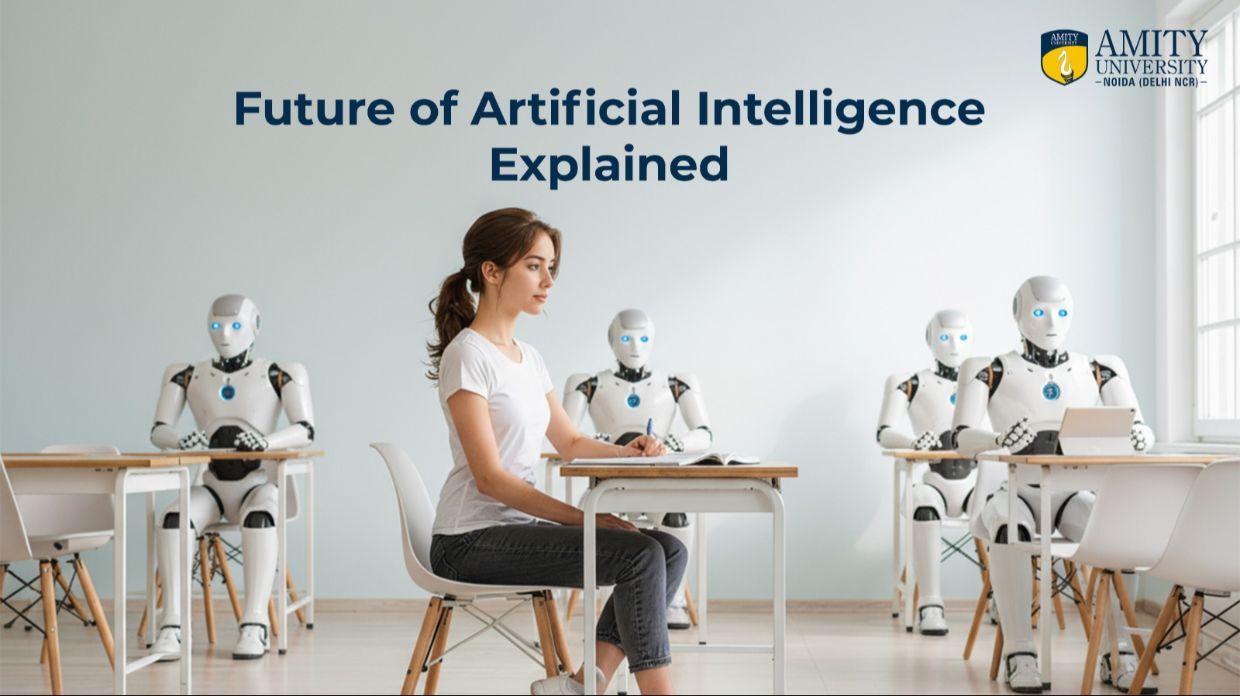
Artificial Intelligence (AI), often described as a tireless learner and data sleuth, is a machine's ability to imitate the human mind by using algorithms to perform tasks such as problem-solving, reasoning, and decision-making. If you have ever wondered what artificial intelligence is, this is the simplest definition for beginners.

AI learning has created new career paths such as AI Product Manager, NLP Engineer, and Data Scientist. With the rise of AI technologies, AI is expected to generate 20 million AI jobs in India by 2030 and contribute $957 billion to the Indian economy by 2035. As AI for beginners becomes more accessible through every AI course and artificial intelligence courses, the demand for professionals continues to rise.

Why AI Matters

Artificial intelligence plays a crucial role in various industries, including healthcare, education, aviation, and logistics. AI applications are responsible for streamlining processes, speeding up tasks, and reducing costs.

AI helps in making sense of raw data by organising it, detecting patterns, and identifying important trends. By automating tasks and shaping business strategies, AI in business enhances productivity, innovation, and overall economic growth. With powerful AI tools and AI technologies advancing every year, the field continues to create opportunities for students and professionals exploring AI and data science.

Top AI Career Paths

Here are some of the top career paths within the field of AI:

  • Data Scientist: This professional prepares data by cleaning and organising large datasets. They detect patterns, trends, and valuable insights. A Data Scientist must understand programming, machine learning, mathematics, and statistics, along with familiarity with big data technologies. These skills are central to many AI and data science roles.

  • NLP Engineer: This expert uses AI to interpret and understand human language. They develop chatbots, language models, and tools that enable machines to communicate. This role requires a strong knowledge of machine learning, linguistics, and programming. It is one of the fastest-growing AI career paths.

  • AI Ethics Specialist: This role focuses on ensuring AI is created and used responsibly. The specialist evaluates risks, maintains transparency, and supports ethical deployment. They need strong analytical and reasoning abilities and a deep understanding of AI concepts.

  • Robotics Engineer: This professional combines AI with mechanical and electrical engineering to build robots and automate tasks. Key skills include programming, sensor integration, algorithms, and an understanding of robotics systems. This path often overlaps with AI applications in automation.

AI Overview @ Amity University

Amity follows an AI for All philosophy, integrating AI learning across disciplines so every student gains foundational AI skills.

  • Career Support: Amity’s network and internship opportunities with industry giants help students plan their AI career roadmap. Students also benefit from expert interactions, AI tools workshops, bootcamps, and live industry projects.

  • In-demand Skills and Relevant Curricula: Amity’s curriculum aligns with industry developments and best-in-class AI technologies. Students acquire important skills such as leadership, collaboration, risk-taking, and problem-solving.

  • Real-world Impact: Amity’s innovation labs are equipped with advanced technologies such as NVIDIA, DGX2 A100 GPUs, and a 10-petaflop computing power. These labs support patent creation and groundbreaking innovations. They give students hands-on experience with cutting-edge AI applications.

The Future of AI

The future of artificial intelligence includes advancements in several major areas:

  • Quantum AI: This area will focus on improved data privacy, fraud detection, and deploying quantum applications to solve real-time business challenges.

  • Generative AI: This will deliver more immersive and personalised experiences across industries like retail, healthcare, and gaming. Generative AI is a growing part of every modern artificial intelligence course.

  • Natural Language Processing (NLP): NLP is expected to advance speech recognition and reduce language barriers. A Gartner report estimates that 70% of people will interact with AI in the future.

Conclusion

Artificial intelligence will continue transforming industries and creating new opportunities. What matters most is the ethical and responsible creation of AI combined with human skills like collaboration, problem-solving, and adaptability. Whether you explore AI tools, pursue an AI course, or want an AI guide to enter the field, the future is bright for anyone ready to learn and innovate.

Are you in it to win it?

FAQs

1. What is artificial intelligence in simple words?

Artificial intelligence is the ability of machines to think, learn, and make decisions using algorithms. It powers automation, data analysis, and many modern AI applications used in industries today.

2. What are the best AI tools for beginners?

AI tools for beginners include ChatGPT, TensorFlow, Google Teachable Machine, IBM Watson, and other platforms that simplify AI learning and help users understand basic AI concepts.

3. Which AI jobs are in high demand?

AI jobs growing the fastest include Data Scientist, NLP Engineer, AI Product Manager, Robotics Engineer, and AI Ethics Specialist. These roles require knowledge of AI technologies and data science.

4. How do I start learning AI as a beginner?

Beginners can start by taking an AI course or artificial intelligence course, exploring AI tools, learning programming basics, and understanding AI concepts through online tutorials or structured programmes.

5. What are the most common AI applications today?

AI applications include automation, chatbots, recommendation engines, fraud detection, robotics, personalised marketing, medical diagnostics, and predictive analytics.

Dr. Ankur Verma
04-11-2025

In today’s digital-first world, having an online presence is no longer optional, especially for students and young professionals who may not yet have formal work experience. Employers, recruiters, and collaborators increasingly look online to understand a candidate’s skills, interests, and initiative. The good news is that you don’t need years of experience to showcase your abilities effectively. What you need is clarity, consistency, and the willingness to demonstrate what you know.

Why Online Skill Visibility Matters More Than Experience

Early in your career, employers often look for potential rather than a long list of job titles. Your online presence can reflect:
  • Your ability to learn independently
  • Your curiosity and discipline
  • How do you apply knowledge in real-world contexts
  • Your communication and analytical skills
This applies not only to technical or creative fields but also to areas like finance, research, and strategy.

Identify Skills You Can Demonstrate Right Now

You likely already have skills worth showcasing, even if you haven’t worked professionally. These may include:
  • Research and analysis
  • Writing and communication
  • Data interpretation
  • Problem-solving
  • Financial awareness
For example, students learning about the stock market for students develop analytical thinking, risk awareness, and decision-making skills, qualities valued across industries.

Use Platforms That Match Your Skill Type

Different platforms work better for different skills:
  • LinkedIn: Share learning journeys, certifications, and insights
  • Blogs or Medium: Write explainers or reflections on topics you’re learning
  • GitHub / Behance / Portfolios: Showcase technical or creative work
  • Google Docs / Notion: Share structured research or learning notes
If you’re exploring finance, creating content like a stock beginner's guide or sharing summaries of market concepts can demonstrate clarity of thought and subject understanding.

Turn Learning into Proof of Skill

One of the most effective ways to showcase skills without experience is to document learning publicly. Instead of saying “I’m interested in finance,” show it by:
  • Writing beginner-friendly explainers
  • Sharing investing tips for young adults
  • Creating simple financial planning frameworks
  • Posting reflections on mistakes and lessons learned

Consistency Builds Credibility

You don’t need viral content. You need consistency. Regularly sharing insights, even once a week, helps build a digital trail of growth. Over time, this positions you as someone who takes learning seriously and applies it thoughtfully. This is particularly effective in areas like personal finance and investing, where understanding grows step by step.

Conclusion

You don’t need formal experience to showcase your skills online; you need intention and structure. By identifying what you’re learning, choosing the right platforms, and consistently sharing your progress, you can build a credible digital presence. Whether it’s writing a stock beginner's guide, exploring the stock market for students, or sharing investing tips for young adults, your online work can speak louder than a resume ever could.

FAQs

1. How can students showcase skills online without job experience?

Students can share learning projects, write blogs, post insights, and document skill development through platforms like LinkedIn or personal blogs.

2. Can learning about the stock market for students be a useful skill to showcase?

Yes. Understanding the stock market for students demonstrates analytical thinking, financial awareness, and long-term planning ability.

3. What kind of content works best for beginners in finance?

Beginner-friendly explainers, summaries, and a simple stocks beginners guide work well to showcase clarity and learning discipline.

4. Are investing tips for young adults good content for online profiles?

Yes. Sharing investing tips for young adults shows practical thinking, responsibility, and the ability to simplify complex ideas.

5. How often should students post content to build an online presence?

Consistency matters more than frequency. Posting once a week with meaningful insights is often enough to build credibility.

Get Up to 100% Scholarship
Alternate Text