CAREER GUIDE
Dr. Isha Bajaj
04-02-2026

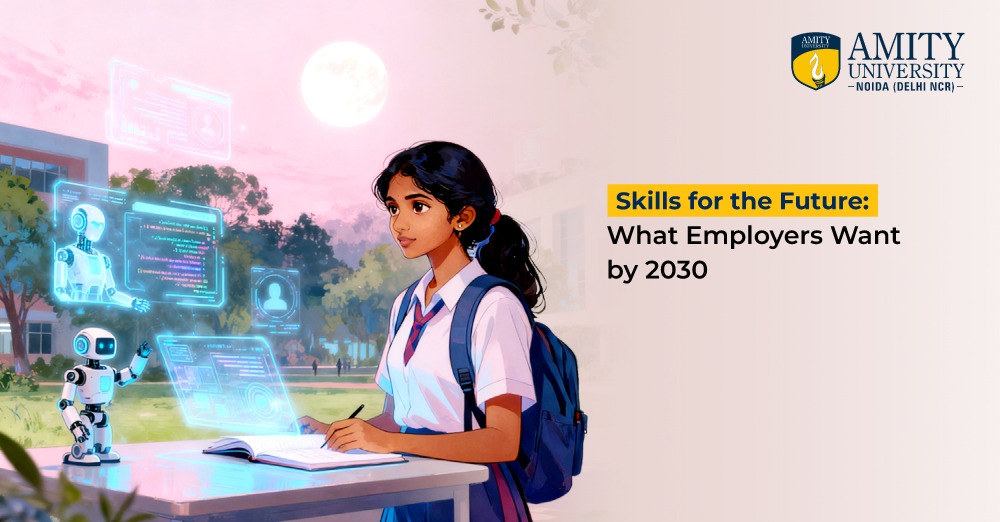
By 2030, workplaces won’t look like they do today. Picture a world where AI and humans co-create, where offices resemble sci-fi innovation hubs with bots crunching numbers while humans design, connect, and lead.
The next decade will belong to those who can balance tech fluency with human intelligence, creativity, adaptability, and empathy. According to the World Economic Forum (WEF), employers of the future will prioritize not just technical mastery, but also well-being, inclusivity, and emotional resilience.
In short, the future of work isn’t about competing with machines; it’s about collaborating beyond them.

Future-Proofing Your Career: The New Skillset

A recent WEF report places AI and Big Data at the top of the fastest-growing skills list, followed by cybersecurity, networking, and digital literacy. But alongside these, human skills like creative thinking, flexibility, resilience, and lifelong learning are predicted to become even more valuable.
Here’s how to future-proof your skillset:
  • AI Collaboration: Learn to interpret data, craft effective prompts, and work alongside AI to innovate, not imitate.
  • Remote Leadership: Leading teams across time zones requires empathy, clarity, and collaboration, plus transparency and accountability.
  • Personal Branding
  •  In the digital world, your professional identity matters. Combine empathy, reasoning, and digital fluency to stand out.
  • Lifelong Learning: Stay relevant through workshops, bootcamps, and certifications. Upskilling and rebooting aren’t optional anymore; they’re essential.

Snapshot: Future Job Skills @2030

  • Master digital literacy: Stay updated with emerging tools and tech.
  • Commit to continuous learning: The future belongs to the adaptable.
  • Collaborate and lead with empathy: Teamwork fuels innovation.
  • Balance tech + soft skills: Machines execute; humans empathize.

Skills That Will Shape the Next Decade

The OECD calls the next generation of skills a blend of intelligence, empathy, and adaptability.
 It’s not about what you know, but how you think, feel, and adapt.
  • Cognitive & Meta-Cognitive Skills: The foundation of problem-solving and creative reasoning, critical thinking, self-regulation, and learning to learn.
  • Social & Emotional Skills: The essence of human connection, empathy, collaboration, and self-belief. Machines can’t replicate these.
  • Practical & Digital Skills: Comfort with tech, not just mastery. The ability to adapt to new tools, integrate digital workflows, and thrive in hybrid setups.

The Amity Edge

At Amity University Noida, students aren’t just prepared for jobs; they’re prepared for the future.
  • Curriculum with a Corporate Accent:– Programs designed around what industries need today and tomorrow.
  • Ticket to the World Stage:– Internships and research projects with global organizations give Amity students unmatched exposure.
  • Placements that Matter:– With record offers up to ₹2 crore per annum, Amity graduates are setting benchmarks across industries.
  • Wisdom from Titans:– Expert-led mentoring, webinars, and leadership sessions equip students to think and communicate like professionals.

Conclusion

By 2030, machines will automate, but humans will elevate. A McKinsey report reveals that organizations prioritizing emotional intelligence (EQ) are 22 times more likely to outperform competitors. In fact, the demand for emotional skills will surge 26% by 2030.
The takeaway?
Machines may run the world, but it’s human hearts and minds that will rule it.

Dr. Vinay Rattan
25-01-2026

Do you believe that staying late hours in office will increase your productivity and value? Wrong. In all likelihood, you’ll earn the dubious distinction of being an exhausted, cranky grump instead of becoming the next Elon Musk. Meanwhile, a good organisational culture isn’t about calling your boss ‘bro.’ Rather, it’s guaranteed to win the HR’s disapproval and will certainly irritate your seniors. These instances are some hard truths students discover post college, as they step into the real world. This blog explores some common misconceptions and debunks myths.
College life isn’t about only adulting. It’s also about dodging cringeworthy advice and uncovering some hard truths about what’s next. Here are some common myths:
1. CV & Resume are the same thing: No, These are siblings with very different personalities. CV or Curriculum Vitae is a detailed look into an individual’s academic and professional achievements. This includes publication, research, awards, conferences, papers. It can be longer than two pages.
On the other hand, a resume centres around job applications in diverse industries like academia, corporate sector and others. Therefore, it is crisp and short and doesn’t extend beyond two pages.Also resume can be customised as per job requirements.
2. Your first job defines the entire career: This is a myth. It’s just a stepping stone to new opportunities, learnings, upskilling and understanding you’re the industry and organisations work. It’s your learning ground in the real world. The first job gives insights into personal strengths and weaknesses.
3. Only big companies offer great growth: Big names may not have a toxic work environment and culture. Good career growth can happen in any organisation if there is a good work culture, transparent communication and other positive factors.
4. ‘This is how I am’ @work: Your family accepts you as you are. But at certain etiquettes are mandatory in office and ‘this is how I am’ attitude is a recipe for disaster and unprofessional behaviour. It’s a bad idea to refer to your boss as bro, no matter how cool they are. Business writing is an art therefore brush up your email writing skills. Politeness is a given, not a privilege so use it liberally. Avoid STOs and jargons in written communication at work and when applying for leave, state the reason for taking an off instead of just informing the higher-ups about your absence from work. You don’t have to use poetic language to communicate well. Instead clear, crisp and polite communication will always meet the objective.
5. Organisational culture: Doesn’t arise from free coffee or snazzy interiors. Rather, it’s a measure of people behave and treat each other. Organisational growth opportunities, transparency and respect are great launchpads for careers.

Leapfrog ahead with Amity

  • From campus to the stars, Amity University Noida crafts launchpads pathbreaking careers, discoveries and global opportunities.
  • Curriculum with Corporate Accent: Courses are designed around what industries demand today and tomorrow.
  • Ticket to the World Stage: Students receive opportunities for internships and research collaborations with top global companies.
  • Placements that Matter: Placements: Record-breaking offers, including packages of over Rs 2 crore annually, prove that Amity students are future-ready.
  • Wisdom from Titans – Expert-led webinars, mentoring and interactions with industry titans to cracking interviews.

Conclusion

It’s okay to be wrong. But staying is that zone for good is harmful. The best way to know something is to research, speak to experts and apply your mind.

FAQs

1. Is a CV the same as a resume?

No. A CV is a detailed document covering academic, research, and professional achievements, while a resume is short, tailored, and focused on specific job applications.

2. Does your first job define your career?

Not at all. Your first job is a stepping stone to learn, explore strengths, and understand how industries and organisations function.

3. Do long work hours mean better productivity?

No. Working smart, managing time well, and maintaining balance is far more effective than staying late and risking burnout.

4. Do only big companies offer career growth?

No. Career growth depends on the company culture, learning opportunities, transparency, and leadership, not just the brand name.

5. What matters most in workplace culture?

True workplace culture comes from respect, collaboration, clear communication, and growth opportunities—not free perks or fancy offices.

Shubham Sharma
18-01-2026

Science fiction has become a syllabus while robots are new reality co-workers, not job usurpers. From crafting a digital nervous system to creating guardians of automation through AI and Blockchain, the future is about collaboration. While mechatronics will build the body, AI powers the brain, robotics and cybersecurity keep everything safe. The future of automation isn’t a BTech specialisation, but crafting it. 

Top Future Trends

  1. AI and Quantum enabled optimisation- These are easing off complex workloads in manufacturing, healthcare and other industries.
  2. Low Code and No-Code platforms- These are speeding digital acceleration by making automation more accessible to non-technical users through natural language prompts.
  3. Retrieval-Augmented Generation (RAG)-Powered Automations: Will accelerate accuracy and reliability by becoming more integral to agent workflows. It will ensure AI decisions are grounded in verified domain-specific and real-time data.
  4. Hyper automation-Will continue to transform industry and businesses by taking over boring and manual tasks and creating more room for productivity.
  5. Physical AI integration in Autonomous Systems is adept at motion planning, collaborates with humans and also integrates perception, thereby responding to real-time changes and navigating in different environments. 

Here’s a checklist of courses that lead to this field:

1. B.Tech in Robotics

Artificial intelligence deals with behaviours that are similar to human cognition. With the world opting for digital tech-based products, the use of artificial intelligence has significantly increased. Amity University Noida is among the top colleges to study AI in Delhi NCR. The diverse undergraduate programs in Artificial Intelligence offered at Amity cover key areas of study. These include descriptive statistics, life skills, discrete mathematics structure with applications to computer science, applied mathematics, programming, blockchain, and much more. The programs are comprehensive and incorporate research-based training to help students understand the key concepts in artificial intelligence and excel in the competitive digital world.
Careers
  • Autonomous Mobile Robot (AMR) Specialist
  • Medical Robotics Engineer
  • AI & Robotics Research Scientist
  • Robotics System Integration Specialist 

2. B.Tech in Mechatronics

This B.Tech in Mechatronics program blends mechanical, electrical, and computer engineering for robotics and automated systems. The program features subjects like OOP, Mechanical Concepts, and Control Systems, preparing students for careers in automation and robotics.
Careers
  • Mechatronics Design Engineer
  • Autonomous Systems Integration Specialist
  • Automation Engineer
  • Robotics Engineer

3. B.Tech in Artificial Intelligence

This is a four-year undergraduate programme designed for students who want to build a strong foundation in intelligent systems and advanced computing. For aspirants exploring which university is best for artificial intelligence, this programme offers structured learning across artificial intelligence, machine learning, and data science, with a clear focus on real-world applications. The curriculum introduces core concepts that help students understand what is the scope of artificial intelligence and its growing relevance across industries. 
The academic structure includes subjects aligned with a standard B.Tech artificial intelligence syllabus, covering programming, data handling, machine learning models, neural networks, and AI-driven decision systems. Practical exposure through laboratories, projects, and case-based learning enables students to apply theory to industry scenarios 
With applications across healthcare, finance, manufacturing, and smart technologies, the programme highlights the scope of artificial intelligence in India and globally.
Careers
  • AI/ML Engineer
  • Automation Specialist
  • Robot Designer
  • AI Product Manager
  • Robotics & AI Integration Engineer

4. B.Tech Computer Science & Engineering  (Internet of Things and Cyber Security Including Block Chain Technology)

This B.Tech CSE (IoT & Cyber Security Including Blockchain Technology) program offers a 4-year specialisation focused on connected devices, security threats, and blockchain. It combines core CSE with IoT, Cyber Security, and Blockchain tracks, preparing students to secure the rapidly growing ecosystem of internet-connected devices.
Careers
  • Cyber Security and Blockchain Consultant
  • Ethical Hacker
  • IoT Security Architect
  • Smart Contract Analyst

Conclusion

The future is not about trends, but creating innovations and transformation that shape lives.

FAQs

1. Which subjects are taught in B.Tech Robotics program?

The subjects include Basic Electrical Engineering, Engineering Chemistry, Engineering Mechanics, Introduction to Computers and Programming in C, Basic Electronics and Linear Integrated Circuits, Object Oriented Programming Using C++ and others.

2. What is the salary structure after a course in B.Tech in Mechatronics? 

Your salary depends on location, experience, industry and organisation an average salary begins from Rs 4 LPA and can scale up to Rs 30 LPA or more.

3. What are the key skill sets in this course?

A B.Tech in Mechatronics degree arms you with top line skills like Robot Operating System (ROS), knowledge of automation and control systems, Integrating sensors, microcontrollers and cloud platforms. You will also learn emerging industry skills like Additive Manufacturing, AI and ML for Robotics and more. 

4. How will a degree in B.Tech in Artificial Intelligence prepare me for the future?

This industry-aligned course prepares graduates for diverse sectors like healthcare, e-commerce, finance, smart manufacturing and others. The course fosters interdisciplinary learning and technical skills such as NLP, Deep Learning, and others. It also gives a real-world experience with industry-live projects.

5. What skills will I gain after a B.Tech Computer Science & Engineering  (Internet of Things and Cyber Security, including Blockchain Technology) degree? 

You will gain cutting-edge skills in cybersecurity, blockchain technology and IoT. These include knowledge of cloud computing, cryptography, firewall management, proficiency in programming languages, secure transactions and knowledge of embedded systems and sensors.

Dr. Ravi Gupta
16-01-2026

B.Tech Mechanical Engineering remains one of the most respected and versatile engineering disciplines. Known for its strong technical foundation and wide industrial relevance, the branch continues to attract students who enjoy innovation, design, problem-solving, and hands-on engineering.
With more students now exploring careers after mechanical engineering, understanding the range of opportunities available becomes essential—whether in core industries, emerging technology sectors, or advanced studies.

Understanding the Scope of B.Tech Mechanical Engineering

The B.Tech mechanical engineering scope is vast, covering everything from automotive and aerospace to energy systems, robotics, and manufacturing. As industries adopt automation, sustainability, and digital transformation, the demand for engineers who understand mechanical systems remains strong.
A degree in B.Tech. Mechanical Engineering equips students with the ability to design, analyse, and optimise machines and processes, making them valuable across both traditional and emerging sectors.

Key Mechanical Engineering Skills That Shape Career Opportunities

Mechanical engineering builds a powerful blend of conceptual and practical skills. Through B.Tech mechanical engineering subjects, students gain expertise in:
  • Thermodynamics
  • Fluid mechanics
  • Machine design
  • Manufacturing processes
  • CAD/CAM
  • Strength of materials
In addition to classroom learning, labs, workshops, industrial training, and real-world engineering projects help students develop hands-on problem-solving abilities. These skills form the backbone of a strong career after mechanical engineering pathways.

Core Mechanical Engineering Job Roles Students Can Pursue

Graduates can explore a variety of traditional roles, including:

Mechanical Engineering Jobs / Mechanical Engineering Career Options

  1. Design Engineer – focusing on 3D modeling, simulation, and product development.
  2. Production Engineer – managing manufacturing processes and ensuring efficiency.
  3. Quality Engineer – overseeing quality standards, testing, and compliance.
  4. Maintenance Engineer – ensuring equipment reliability and smooth plant operations.
These roles serve as strong entry points into industries such as automotive, aerospace, heavy machinery, power plants, and manufacturing.

High-Demand Industries Hiring Mechanical Engineers

There are numerous jobs for mechanical engineers in India across sectors such as:
  • Automotive & EV manufacturing
  • Aerospace & defence
  • Oil & gas
  • Renewable energy
  • Robotics & automation
  • HVAC & refrigeration
  • Steel, cement, and heavy industries
  • Railways and infrastructure companies
Mechanical engineers remain essential to these industries due to their broad technical capabilities.

How the B.Tech Mechanical Engineering Curriculum Supports Career Growth

A strong curriculum prepares students for industry challenges. The B.Tech mechanical engineering syllabus includes core engineering sciences, design subjects, computational tools, and industry-focused electives.

Important B Tech Subjects in Mechanical Engineering

  • Engineering Mechanics
  • Heat Transfer
  • Machine Design
  • Manufacturing Technology
  • Control Systems
  • Robotics Basics
The curriculum at institutions like Amity University Noida also integrates internships, workshops, and project-based learning, enabling students to apply theoretical knowledge in real-world engineering environments.

Emerging Career Pathways Beyond Traditional Roles

  • Mechanical engineers today are finding exciting roles in:
  • Automation & Robotics – working on smart factories and intelligent machines
  • Renewable Energy – designing systems for solar, wind, and sustainable technologies
  • Mechatronics – blending mechanical engineering with electronics and computer science
  • Industrial Design – improving product usability, aesthetics, and performance
These fields expand the traditional boundaries of mechanical engineering and offer future-ready career opportunities.

Higher Education Opportunities After B.Tech Mechanical

Students can also pursue advanced B.Tech mechanical engineering courses, such as:
  • M.Tech in Mechanical, Thermal, Design, or Manufacturing
  • MBA for careers in management, operations, or consulting
  • Professional certifications (CAD/CAM, Six Sigma, Robotics, HVAC, Project Management)
These pathways help students specialise further or transition into leadership roles.

Conclusion

A career after mechanical engineering continues to offer stability, diversity, and long-term growth. With opportunities across core engineering and emerging technology sectors, students can build rewarding careers based on their interests, whether in design, manufacturing, research, automation, or renewable energy. By choosing the right institution, gaining practical skills, and staying updated with new technologies, mechanical engineers can thrive in a competitive industry landscape.

FAQs

1. What are the top career options after B.Tech Mechanical Engineering?

Design, production, quality, maintenance, R&D, robotics, and renewable energy are popular options.

2. Which industries offer the best mechanical engineering jobs?

Automotive, aerospace, energy, manufacturing, automation, and infrastructure sectors offer strong opportunities.

3. What subjects are included in the B.Tech Mechanical Engineering syllabus?

Subjects include thermodynamics, machine design, manufacturing processes, fluid mechanics, and robotics basics.

4. Do mechanical engineers have good job opportunities in India?

Yes, mechanical engineers are in demand across manufacturing, energy, robotics, automotive, and emerging technology sectors.

5. What skills are important for a successful mechanical engineering career?

Analytical ability, CAD/CAM proficiency, design thinking, problem-solving, and strong fundamentals in mechanical sciences.

6. Can mechanical engineers pursue higher education after B.Tech?

Yes, they can opt for M.Tech, MBA, or specialised certifications to enhance their career prospects.

Vijay Kumar
11-01-2026

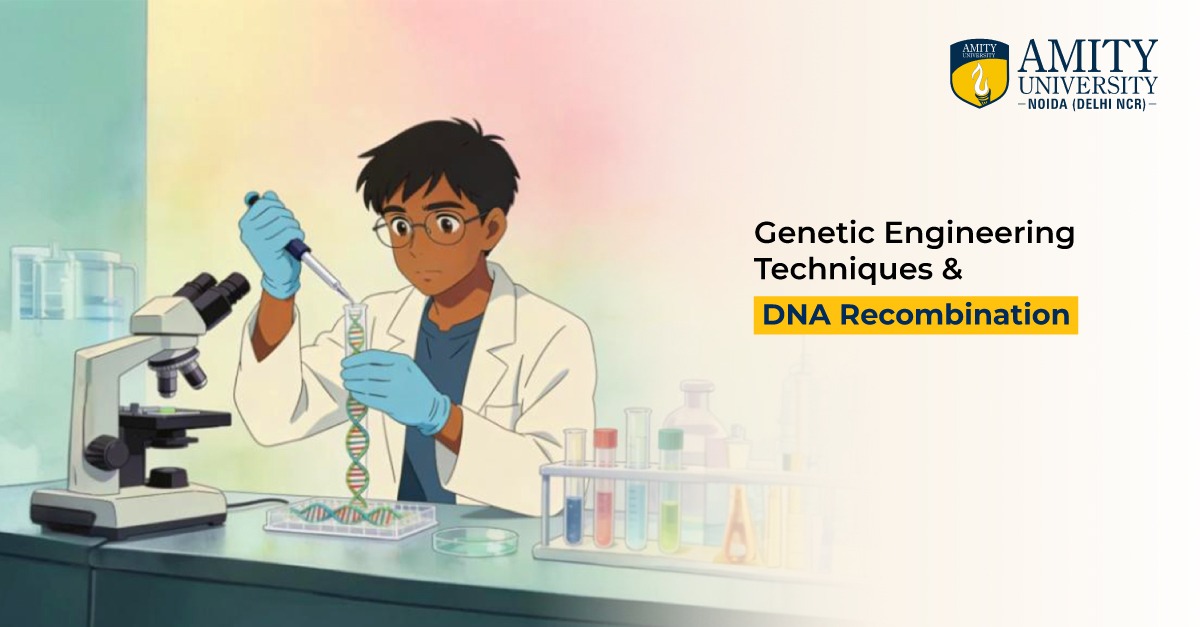
Modern biotechnology has transformed how scientists understand, modify, and apply biological systems to solve real-world problems. At the centre of this transformation lies genetic engineering, a field that allows precise manipulation of genetic material to enhance or introduce desired traits. One of the most powerful mechanisms behind this process is DNA recombination, which enables scientists to rearrange genetic sequences in controlled ways.
Together, genetic engineering techniques and DNA recombination have become essential tools in medicine, agriculture, industry, and research.

Understanding Genetic Engineering

Genetic engineering refers to the direct modification of an organism’s DNA to alter its characteristics. Unlike traditional breeding methods, genetic engineering works at the molecular level, allowing scientists to add, remove, or modify specific genes with accuracy.
Common applications of genetic engineering include:
  • Development of therapeutic proteins
  • Creation of disease-resistant crops
  • Improvement of industrial microorganisms
  • Biomedical research and diagnostics
These applications rely heavily on advanced genetic engineering techniques that ensure precision and reliability.

What Is DNA Recombination?

DNA recombination is a biological process in which genetic material from different sources is combined to form a new DNA sequence. In biotechnology, this process is deliberately engineered to create recombinant DNA with specific functions.
Through DNA recombination, scientists can:
  • Insert a gene of interest into a host organism
  • Enable the expression of new proteins
  • Study gene function and regulation
  • Replicate genetic material efficiently
DNA recombination is the foundation upon which many modern genetic engineering techniques are built.

Key Genetic Engineering Techniques Using DNA Recombination

Several widely used genetic engineering techniques depend on DNA recombination:

Recombinant DNA Technology

This technique involves combining DNA fragments from different organisms and inserting them into a host cell, such as bacteria, to produce useful proteins.

Plasmid-Based Gene Cloning

Plasmids act as vectors to carry recombinant DNA into host cells, enabling gene replication and expression.

CRISPR and Targeted Gene Editing

While more advanced, CRISPR systems also rely on controlled DNA recombination to edit or replace specific genetic sequences.

Transformation and Transfection

These processes introduce recombinant DNA into host cells, allowing genetic modification and expression.

Role of DNA Recombination in Modern Biotechnology

The impact of DNA recombination in biotechnology is far-reaching. It enables:
  • Production of insulin, vaccines, and enzymes
  • Development of genetically modified crops
  • Creation of model organisms for research
  • Advances in gene therapy and diagnostics
Without DNA recombination, many breakthroughs in genetic engineering would not be possible.

Why Genetic Engineering Techniques Matter Today

As global challenges increase in healthcare, food security, and sustainability, genetic engineering techniques offer scalable solutions. DNA recombination ensures that these solutions are precise, efficient, and adaptable to evolving scientific needs. Understanding these techniques is essential for students and researchers entering biotechnology, genetics, and life sciences.

Conclusion

Genetic engineering techniques, powered by DNA recombination, form the backbone of modern biotechnology. From medicine to agriculture, these methods allow scientists to harness genetic information for innovation and problem-solving. As biotechnology continues to evolve, the role of DNA recombination in genetic engineering will remain central to scientific progress.

FAQs

1. What is genetic engineering, and why is it important?

Genetic engineering involves modifying DNA to achieve specific traits, playing a key role in medicine, agriculture, and biotechnology.

2. What is DNA recombination in genetic engineering?

DNA recombination is the process of combining genetic material from different sources to create new DNA sequences used in biotechnology.

3. Which genetic engineering techniques use DNA recombination?

Techniques such as recombinant DNA technology, gene cloning, and targeted gene editing rely on DNA recombination.

4. How does DNA recombination support modern biotechnology?

DNA recombination enables protein production, genetic modification, research advancements, and therapeutic development.

5. Why should students study genetic engineering techniques?

Understanding genetic engineering techniques prepares students for careers in biotechnology, research, healthcare, and life sciences.

Vikas Sood
09-01-2026

Not everyone wants to follow the beaten path. Some want to decode atoms, analyze data like detectives, or design satellites that redefine exploration. Gen Z is rewriting career norms by choosing niche, future-ready courses that fuse science, creativity, and innovation. From Nanotechnology to Neuroscience, Virology, and Food Technology, these programs are producing the next generation of innovators, scientists, and problem-solvers.
According to global projections, the Statistics sector alone is expected to grow by 30% by 2030, followed closely by Virology and Nanotechnology, driven by the twin forces of AI and health innovation.

Niche Courses: The New-Age Career Avengers

If you’re looking for a career that breaks convention and thrives on curiosity, these emerging programs open doors to global opportunities.

Virology & Immunology: The Virus Slayers

The pandemic has spotlighted the importance of health science like never before. Degrees such as B.Sc. Life Sciences or Medical Microbiology & Immunology prepare students to fight diseases, design vaccines, and enhance global immunity.
Industries: Healthcare | Biotechnology | Pharmaceuticals | Agriculture | Environmental Science
Top Careers:
  • Immunologist:– Designs vaccines and studies immune responses.
  • Virologist:– Researches viral structures and develops countermeasures.
  • Epidemiologist:– Tracks and predicts the spread of diseases using data.
Career Hubs: India, USA, UK, Canada, Switzerland, Germany

Nanotechnology: The Science of the Small, Powering the Big

Nanotechnology merges physics, chemistry, and biology to build breakthroughs at the atomic level. From disease-fighting nanoparticles to smart materials in tech and medicine, it’s one of the most interdisciplinary and high-demand fields today.
Industries: Electronics | Material Science | Biotechnology | Food Science | Forensics | Agriculture
Top Careers:
  • Food Scientist – Ensures product quality, safety, and nutrition.
  • Material Scientist – Designs materials for extreme or space conditions.
  • Nanotech Engineer – Develops nanoelectronics and biomedical devices.
Career Hubs: Japan, South Korea, Germany, USA, India

Space Science: The Universe is Your Classroom

If space exploration excites you, B. Tech in Avionics or Space Science offers the perfect launchpad. Students learn AI, robotics, aerospace systems, and satellite operations, combining engineering precision with limitless imagination.
Industries: Aviation | Environmental Monitoring | Communication | Mining | Weather Forecast | Space Tourism
Top Careers:
  • Drone Systems Architect:– Designs and operates AI-powered drones.
  • Spacecraft Operations Engineer:– Manages satellite health and controls from ground stations.
  • Avionics Engineer:– Builds and maintains aircraft electronics and radar systems.
Career Hubs: France, UAE, Germany, USA

Food Technology: Where Science Meets Taste

From nutrition to innovation, the B.Sc. in Nutrition & Dietetics blends biology, chemistry, and food science to build healthier futures.
Industries: Food Safety | Dairy | Agri-Food Tech | Packaging | Nutraceuticals | Beverages
Top Careers:
  • Sports Nutritionist:– Designs nutrition plans for athletes.
  • Corporate Wellness Consultant:– Creates workplace nutrition programs.
  • Food Influencer:– Combines science and social media to promote healthy eating.

Statistics: The Language of the Future

In an age driven by data, statisticians are the new strategists. This field empowers you to find patterns, decode trends, and predict the future using numbers and logic.
Industries: AI & Tech | Fintech | Healthcare | E-Commerce | Sports Analytics | Marketing | Education | Entertainment
Top Careers:
  • Business Intelligence Analyst:– Converts data into strategic business decisions.
  • Data Analyst:– Identifies trends for performance and growth.
  • Data Scientist:– Uses AI and predictive models to forecast outcomes.
Career Hubs: India, USA, Singapore, Germany

The Amity Edge

  • Ticket to the World Stage:– From internships with top global industries to hands-on research projects, Amity University Noida gives students international exposure.
  • Toolkit for a Byte Hero:– Encouraging a design-thinking mindset, students work on real-world industry projects that demand innovation and strategy.
  • Innovation Playground:– State-of-the-art labs equipped with global-standard technology for experimentation, teamwork, and leadership development.
  • Record-Breaking Placements:– From ₹2 crore annual packages to placements with 500+ corporates, including Fortune 500 companies, Amity graduates redefine success every year.

Conclusion

In a world where automation is rewriting careers, niche courses are the new mainstream. They combine passion with purpose, turning curiosity into careers that shape industries and impact lives. So, step beyond the obvious. The future belongs to those who create what doesn’t exist yet.

FAQs

1. What are niche courses?

Courses in emerging fields like Nanotech, Virology, Space Science, and Statistics that offer hands-on skills and global career opportunities.

2. What careers can I pursue?

Roles like Nanotech Engineer, Virologist, Immunologist, Spacecraft Engineer, Material Scientist, and Food Scientist across biotech, healthcare, aerospace, and tech.

3. What skills will I learn?

Data analysis, AI, lab research, design thinking, innovation, problem-solving, and interdisciplinary scientific skills.

4. What is the eligibility at Amity Noida?

10+2 in Science (PCM/PCB) with required minimum marks; some courses may require entrance exams.

5. How does Amity support placements?

International internships, industry tie-ups, research projects, state-of-the-art labs, and access to top companies with high placement packages.

Get Up to 100% Scholarship
Alternate Text