EXAMINATION
Dr. Renu Oberoi
02-05-2026

The release of the kcet 2026 admit card is usually the moment when preparation starts feeling real. By now, most students already know that engineering admissions in 2026 are going to stay competitive, especially for top Computer Science and AI seats. That is exactly why building a backup admission strategy matters before counselling begins, not after results arrive.
A backup plan does not mean low confidence. It simply keeps your options open while you prepare seriously for KCET.

KCET 2026 Admit Card and Exam Update

The kcet hall ticket 2026 was released online on April 10 through the official Karnataka examination portal. The Kannada language test was conducted on April 22, followed by Physics and Chemistry on April 23 and Mathematics or Biology on April 24. Results are expected in May, with counselling likely to begin soon after. Students should now focus on:
  • Tracking provisional answer keys and result announcements
  • Preparing counselling documents early
  • Shortlisting engineering colleges beyond one exam pathway
  • Reviewing alternative admission routes through JEE Main or CUET

Why Backup Planning Matters Before Results

A lot changes between exam day and seat allotment. Sometimes scores are decent but branch availability becomes the issue. In other cases, students realise they want AI, Data Science, or Cybersecurity specifically, which usually closes at higher ranks. That is why a backup engineering admission strategy helps reduce pressure. Students preparing for btech admission 2026 should avoid relying on only one counselling process.

A sensible shortlist should include:

  • Colleges accepting multiple entrance pathways
  • Flexible admission criteria beyond state quota
  • Strong placement support
  • Future-focused B.Tech specialisations
  • Good internship and industry exposure

How to Stay Focused Without Losing Backup Opportunities

There is a practical way to balance both. Continue treating KCET as the main target while quietly keeping alternative applications active in the background. Most successful applicants in 2026 are applying across multiple pathways simultaneously. A few small actions now can save a lot of stress later. Smart Planning Steps:
  • Keep digital and printed academic documents ready
  • Monitor application deadlines for private universities
  • Track JEE Main and CUET counselling timelines
  • Research hostel, fees, and placement data beforehand
  • Compare branch availability instead of only rankings

Engineering Branches Students Are Prioritising in 2026

The demand pattern has shifted noticeably over the last few admission cycles. Traditional branches still matter, but emerging technology domains are drawing stronger interest.
Popular choices currently include:
  • Computer Science Engineering
  • Artificial Intelligence and Machine Learning
  • Data Science
  • Cybersecurity
  • Electronics and Communication Engineering
Interest is also growing in areas like renewable energy, robotics, and biotechnology because industries are investing heavily in these sectors.
Students should choose a branch based on long term interest, not social media trends or cutoff discussions alone.

Building an Out-of-State Engineering Shortlist

Many Karnataka students are now considering universities outside the state as part of their backup strategy. NCR institutions, especially those with strong industry links, continue attracting applicants because of internship access and placement exposure.
Amity University Noida offers a wide range of B.Tech programmes including AI, Data Science, Cybersecurity, Aerospace, Biotechnology, and Electronics. The university also focuses heavily on industry projects, advanced research labs, global exposure programmes, and practical engineering training. For students exploring engineering colleges in noida, this makes out-of-state applications worth considering alongside KCET counselling.

Some highlights students often compare include:

  • 20+ engineering specialisations
  • Industry collaborated labs and live projects
  • AI powered learning infrastructure
  • Scholarship opportunities for merit students
  • Strong placement and internship ecosystem in NCR

Backup Admission Checklist for B.Tech 2026

A little preparation now prevents rushed decisions later. Hence, before counselling begins, keep this checklist ready:
  • KCET admit card and score updates
  • Class 10 and 12 mark sheets
  • Entrance exam scorecards
  • ID proof and passport photographs
  • College shortlist with deadlines
  • Fee and scholarship comparison notes

Final Thoughts on KCET 2026 Admit Card Planning

The release of the kcet 2026 admit card is not only about the examination itself. It is also the right time to think strategically about admissions. Students who build parallel options early usually make calmer and better choices during counselling season.
Engineering admissions are increasingly flexible in 2026. If one route becomes uncertain, another may still lead to the branch and career path you want.

FAQs

1. Is the KCET 2026 admit card released?

Yes, the admit card was released on April 10, 2026.

2. What are the KCET 2026 exam dates?

The examinations were conducted from April 22 to April 24, 2026.

3. Why should I build a backup engineering plan now?

Backup planning helps secure alternative admission opportunities if your preferred KCET rank or branch becomes difficult during counselling.

4. Can I apply outside Karnataka while preparing for KCET?

Yes. Many universities across India accept JEE Main, CUET, or direct applications alongside state entrance exams.

5. Which B.Tech options are worth considering in 2026?

Computer Science, AI and ML, Data Science, Cybersecurity, and Electronics remain among the strongest options due to industry demand.

Dr. Isha Bajaj
01-05-2026

Choosing the right path for NCET 2026 teaching careers can feel confusing at first, especially with multiple teacher training formats now available under NEP 2020. The good part is that NCET is not just an entrance exam. It is also a starting point for understanding where you fit best in the education sector. Some students enjoy working with young children, while others prefer teaching senior classes, specialised subjects, or even digital learning platforms.
The right programme depends on your career goals, subject strengths, and the type of classroom environment you see yourself in a few years from now.

What NCET 2026 Actually Helps You Do

NCET mainly supports admission into Integrated Teacher Education Programmes, commonly called ITEP. These courses combine subject learning with professional teacher training from the beginning.
Students appearing for the exam should remember a simple thing. NCET opens opportunities, but counselling choices, eligibility, and long-term interests matter just as much. One of the biggest decisions after NCET is choosing between integrated and standalone formats. Both work well, but they suit different learners.
Here is what NCET can lead you to:
  • Four-year integrated teacher education programmes
  • Subject-specific teaching pathways in arts, science, or languages
  • Preparation for future CTET and government teaching eligibility
  • Career routes in school education, EdTech, and academic support services
  • Understanding Integrated and Standalone Programmes

Integrated Programmes

Integrated programmes combine graduation and teacher training together. Students complete both within four years after Class 12.
These programmes are suitable for students who are already certain about entering teaching careers. Key advantages include:
  • Early classroom exposure
  • Continuous pedagogy training
  • Better alignment with NEP 2020 reforms
  • Strong preparation for school teaching roles

Standalone Teacher Training Courses

Standalone routes include B.Ed after graduation or specialised elementary education programmes.
These options are ideal for students who plan to teach later or want flexibility before committing fully. Some common routes include:
  • B.Ed after BA, B.Sc, or equivalent degree
  • B.El.Ed focused on primary and elementary teaching
  • Subject-specific teaching pathways for secondary education

Choosing Courses Based on Career Goals

When planning NCET 2026 teaching careers, students should think beyond just course names. The more important question is where you want to teach and which age group matches your personality. 

If You Enjoy Working with Young Children

A primary or elementary education route may suit you better. Good options include:
  • B.El.Ed programmes
  • Foundational stage teaching pathways
  • Early childhood and elementary education specialisations

If You Prefer Subject Expertise

Students interested in mathematics, science, English, or social sciences may benefit from an integrated BA B.Ed or B.Sc B.Ed formats. These programmes help build:
  • Subject mastery
  • Classroom teaching techniques
  • Curriculum planning skills
  • Assessment and communication abilities

Teaching Careers Growing in 2026

The education industry is changing quickly. Schools today expect teachers to understand technology, inclusive learning, and student engagement methods alongside academics. There is also increasing demand for trained educators in private schools and learning platforms across urban regions like Noida. Some fast-growing teaching career options include:
  • Digital and hybrid classroom teaching
  • STEM education roles
  • Inclusive education support
  • Academic counselling
  • Curriculum development
  • EdTech content and training

What to Compare Before Selecting a Programme

An education course should offer more than theory classes. Practical exposure matters a lot in teaching careers. 
At Amity University Noida, programmes like B.Ed and B.El.Ed focuses on practical classroom learning, internships, communication skills, and holistic teacher preparation. The university also provides industry exposure, career support, and a strong academic environment for future educators exploring teacher training courses in India. Before applying, students should check:
  • Internship and school training opportunities
  • Faculty expertise and classroom exposure
  • Industry-aligned curriculum
  • Communication and personality development support
  • Placement assistance and career guidance
  • Teaching labs and digital learning infrastructure

Final Thoughts on NCET 2026 Teaching Careers

The best decisions about NCET 2026 teaching careers come from honestly understanding your interests. Some students thrive in elementary classrooms. Others enjoy specialised secondary teaching or digital education environments. There is no single perfect route for everyone.
Take time to compare programme structures, classroom exposure, and long-term opportunities before applying. A well-chosen education programme can shape not only your career, but also the learning experience of hundreds of future students.

FAQs

1. How do I choose the right education programme after NCET?

Choose based on your preferred age group, subject interest, career goals, and course format.

2. What is the difference between integrated and standalone teacher training?

Integrated programmes combine graduation and teacher education together, while standalone B.Ed courses are pursued after graduation.

3. Which teaching careers are growing in 2026?

EdTech, STEM teaching, inclusive education, academic counselling, and digital learning roles are growing rapidly.

4. Should I pick a course based on grade level or specialisation?

Ideally, consider both. Your comfort with specific age groups and subjects should guide the decision.

5. How important is practical classroom exposure?

It is extremely important because internships and teaching practice help students develop confidence and real classroom management skills.

Dr. Isha Bajaj
01-05-2026

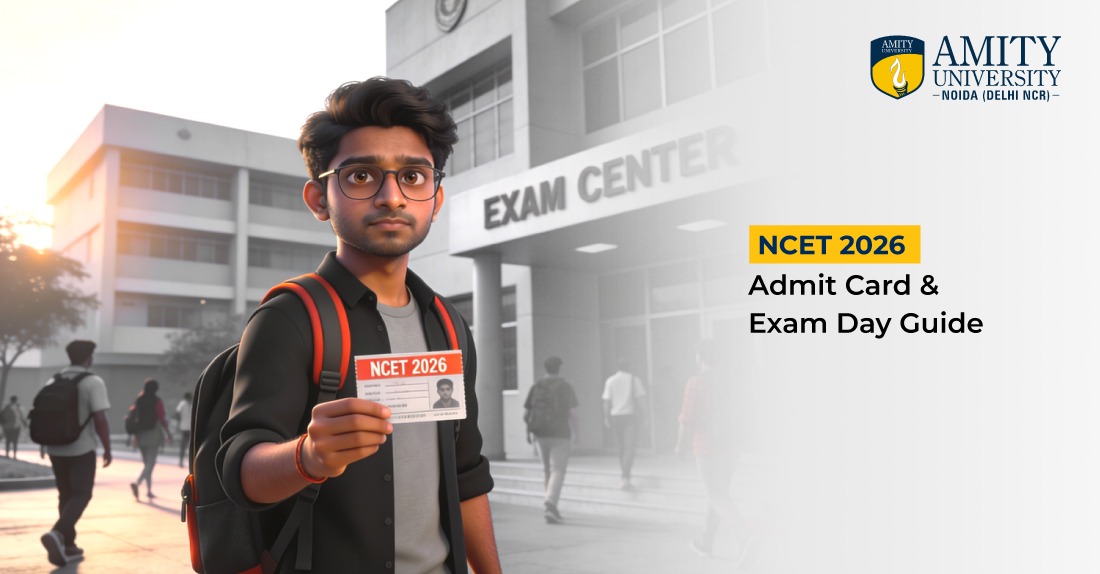
The release of the NCET Admit Card 2026 marks an important step for students preparing for careers in teaching and education. If you have already downloaded your admit card, this is the time to slow down, check every detail carefully, and focus on exam-day readiness instead of last-minute panic. Many candidates lose confidence over small, avoidable mistakes like arriving late, carrying the wrong ID proof, or misunderstanding reporting instructions.
The NCET 2026 examination was conducted on April 17 and 18 in Computer-Based Test mode. For students waiting for answer keys and results, understanding the next steps matters just as much as the exam itself.

What to Do After Downloading the NCET Admit Card 2026

Before anything else, verify all the information printed on the admit card. Even a spelling mismatch can create unnecessary stress at the exam centre. It is smart to print at least two or three A4 copies. Keep one in your bag and another at home. Candidates travelling to a different city should also locate the exam venue a day earlier. That one visit often saves more stress than hours of revision. 

Check the following details carefully:

  • Candidate name and photograph
  • Exam centre address
  • Shift timing and reporting time
  • Application number and subject details
  • Category and date of birth

NCET Exam Day Instructions Students Should Follow

The NCET exam day instructions are strict because the examination is conducted digitally and follows national-level entrance protocols. Avoid carrying phones, smart watches, earphones, calculators, notebooks, or large bags. Security checks are mandatory, and prohibited items can delay entry.
Students appearing for the teacher education entrance exam should reach the centre at least one hour early. Entry usually closes before the examination begins, and late arrivals are rarely allowed inside.

Carry these items:

  • Printed admit card
  • Original photo ID proof
  • Two passport-size photographs
  • Transparent ballpoint pen
  • Xerox copy of ID proof

Common Mistakes That Create Exam-Day Stress

A surprising number of students prepare academically but overlook practical details. That often affects performance more than the paper difficulty itself. The NCET paper tests language skills, teaching aptitude, domain knowledge, and reasoning ability. Since it is a timed CBT exam, calm decision-making matters. If one question feels confusing, move ahead and return later.

Some common mistakes include:

  • Reaching the centre without checking the route
  • Carrying mismatched ID proof
  • Spending too much time on difficult MCQs
  • Skipping meals before the exam
  • Ignoring sleep the previous night

Planning Beyond the Exam Matters Too

Students usually focus only on results, but this is also the right phase to explore future teacher courses and admission pathways. Under the National Education Policy framework, NCET supports admission into integrated teacher education programmes across India. Many students also explore b ed admission 2026 options alongside integrated programmes to keep multiple pathways open.

You can begin shortlisting programmes based on:

  • Preferred teaching level
  • Subject specialisation
  • Campus location
  • Internship exposure
  • Teaching practice opportunities

Teacher Education Programmes at Amity University Noida

Amity University Noida offers structured education programmes designed for students serious about teaching careers.

B.Ed Programme

The B.Ed course focuses on classroom learning, child development, communication skills, and practical school internships. Students gain exposure to real teaching environments instead of only theory-based learning. Key highlights include:
  • Two-year programme structure
  • School internship training
  • Career-focused communication modules
  • Personal interview-based selection process

B.El.Ed Programme

The B.El.Ed course is designed for students interested in elementary and primary education. The curriculum combines academics with creative learning methods, environmental studies, and classroom engagement. Students benefit from:
  • Experiential learning approach
  • Focus on child psychology
  • Communication and activity-based teaching
  • Four-year integrated structure

Conclusion

The NCET Admit Card 2026 is more than just an entry document. It signals the beginning of your journey into professional teacher education. Whether you are waiting for results, preparing for counselling, or exploring future academic options, staying organised now can make the transition smoother later. Teaching remains one of the most meaningful professions, and careful planning after NCET can help you build a strong foundation for that path.

FAQs

1. Is the NCET 2026 admit card released?

Yes, the admit cards were released on April 13, 2026.

2. What documents should I carry on NCET exam day?

Carry the admit card, original photo ID, passport photographs, and a transparent pen.

3. What is the NCET 2026 exam date?

The NCET 2026 exam was conducted on April 17 and 18.

4. Who should appear for NCET?

Students interested in integrated teacher education programmes should appear for NCET.

5. What can I do after the NCET exam?

You can prepare for counselling, shortlist education programmes, and explore B.Ed or integrated teaching.

Shubham Sharma
30-04-2026

If you are wondering after ncet 2026 what next, the short answer is simple. Start preparing for counselling, shortlist teacher education programmes carefully, and choose a pathway that actually fits the kind of educator you want to become. A lot of students rush into applications without understanding the difference between integrated teaching courses, B.Ed programmes, and elementary education routes. That usually creates confusion later.
NCET 2026 is not the finish line. It is the entry point into modern teacher education under the National Education Policy framework. What you choose next can shape the age group you teach, the subjects you specialise in, and even the type of schools you work with in the future.

Understanding How NCET Fits Into Teacher Education

The NCET examination supports admissions into integrated teacher education programmes across universities in India. After results are announced, students move into counselling rounds, choice filling, and document verification. Students planning a long-term career in teaching after class 12 should think beyond entrance scores and focus on teaching style, classroom interests, and child engagement. Most candidates now explore:
  • Four-year integrated teacher programmes
  • Traditional B.Ed routes
  • Elementary education pathways
  • Subject-focused teaching degrees

B.Ed, B.El.Ed and Integrated Routes Explained

Many students hear these course names repeatedly but are not always clear about what each one actually prepares them for. At Amity University Noida, the B.Ed programme includes subjects like childhood development, language across curriculum, communication skills, and school internship training.

B.Ed Programme

A B.Ed course is generally pursued after graduation. It focuses on teaching methods, classroom management, curriculum understanding, and practical school internships. This route suits students who:
  • Already hold a bachelor’s degree
  • Want to teach middle or senior classes
  • Prefer a shorter professional teaching qualification

Understanding the B.El.Ed Course

The B.El.Ed. course is designed for students interested in elementary and primary education. It combines academic learning with child psychology, experiential teaching, communication, and creative classroom methods. The programme also helps students understand emotional and behavioural development, which matters a great deal in early education today. This pathway is often a strong fit for students who:
  • Enjoy working with younger children
  • Want integrated teacher preparation after Class 12
  • Prefer activity-based learning environments

Integrated Teacher Education Programmes

Integrated routes combine subject learning with teacher training from the beginning. Instead of completing graduation first and then pursuing teaching qualifications later, students prepare for both together. For students exploring teacher education courses, integrated formats are becoming increasingly relevant in 2026. These programmes are useful because they offer:
  • Early classroom exposure
  • Continuous pedagogy training
  • Better alignment with NEP 2020 goals
  • Structured teaching practice over multiple years

Teaching Careers Are Changing Quickly

The education sector looks very different now compared to even five years ago. Schools increasingly expect teachers to manage digital tools, interactive learning, and inclusive classrooms confidently. Students applying for b ed admission 2026 must also pay closer attention to internship exposure and practical teaching environments instead of only degree titles. Some emerging opportunities include:
  • Foundational literacy teaching
  • Digital and blended classrooms
  • Special education support
  • Educational counselling
  • Curriculum development

Exploring Education Courses in Noida

Students looking at education courses in noida often compare programmes based on teaching practice, faculty exposure, and career support rather than just fees or duration.
Amity University Noida offers structured teacher education programmes with practical learning components, communication training, and classroom internships. The learning approach focuses on both academic theory and real teaching experience, which becomes important during placements and school interactions later.

Application and Counselling Checklist

Before counselling begins, organise the basics properly. Students should also shortlist multiple programme options instead of depending on a single counselling round. Keep these ready:
  • NCET scorecard
  • Class 10 and 12 marksheets
  • Graduation documents if applicable
  • Identity proof and photographs
  • Category certificates if required

Conclusion

For students asking after ncet 2026 what next, the best approach is to evaluate your teaching goals carefully before choosing a programme. Whether you pursue a B.Ed, an integrated route, or a B.El.Ed programme, the right decision depends on the learners you want to teach and the type of classroom experience you want to build. Teaching today is no longer limited to textbooks and lectures. It is becoming more creative, technology-driven, and student-focused every year.

FAQs

1. What courses can I pursue after NCET 2026?

You can explore integrated teacher education programmes, B.Ed courses, and elementary education pathways.

2. Is B.Ed the only option after NCET?

No. Students can also pursue integrated teacher education programmes and B.El.Ed courses.

3. What is the difference between B.Ed and B.El.Ed?

B.Ed is usually pursued after graduation, while B.El.Ed is an integrated programme focused on elementary education after Class 12.

4. Can I explore integrated teacher education routes too?

Yes. NCET primarily supports admissions into integrated teacher education programmes.

5. What skills matter most for a teaching career in 2026?

Communication, classroom management, digital teaching ability, empathy, and subject understanding are highly important.

Dr. Deepak Khanna
29-04-2026

What are the career options after 12th? This is the topmost question on everyone’s mind post CBSE results declaration. These days, choosing the right career is like looking for a needle in the haystack because of a plethora of choices. From STEM courses, art programs, liberal arts to nailing the best industry skills, everything depends on one major decision—Choosing the right course and university to convert your passion into a lasting career.

What to do after XII Board Results and How to Choose the Right University and Career

Take a deep breath and prepare a to-do list. This is a quick reality check between what you want versus what exists in the industry. It will help you align your interest and goals with what the top universities offer. Here’s everything you should consider:
1. What’s trending, Industry? Hit the internet and research new roles, careers and industries providing maximum employment.
2. Evaluate Future prospects: Don’t forget to check future projections on employment, upskilling and sector-wise forecasting from reliable sources.
3. Self-SWOT Analysis: Identify your core interests, natural talents, and personality traits. Do you enjoy teamwork or solo projects? Are you creative or analytical? Self-assessment is the foundation of a good career choice as it gives an understanding of the comfort factor whether as an entrepreneur or as a high or a corporate career.
4. Gain Real-World Experience: Choosing a career is not about end-goal, but the journey. Therefore internships, volunteer work, or short-term courses are the stepping stones to that path—does your chosen course give that choice?
5. The Big Picture: Money with meaning is the new mantra. It's not just about salary. Consider work-life balance, job security, long-term growth prospects in the future career.
6. Set Goals: Create three slots: what education, skills and experience are required for your chosen career.

Best Sectors and Skill Based Careers After 12th

1. Engineering: Computer Science, Cybersecurity, AI, it, Civil Engineering, Mechatronics, Avionics, Electrical and Electronics, Nanotechnology and more.
2. Pure Sciences: Physics, Chemistry, Statistics, Mathematics, Biotechnology, Life Sciences, Anthropology, Zoology, Microbiology, Biomedical Science.
3. Specialised Courses: Bioinformatics, Human Genetics & Molecular Medicine, Environmental Science, Forensic Sciences.
4. Finance: Fintech, Actuarial Science, Accounting and Finance, Financial Analytics, BBA (Financial Services and Markets).
5. Commerce: Economics, Bachelor of Management Studies (BMS), Bachelor of Commerce, BBA
6. Amity’s Specialised Programs—Dual Degree and 3C Degree Programs- Amity University Noida offers over 150 bachelors and Masters programs in their ambit. This innovative program lets students begin their studies at Amity University in India before transferring to a leading international partner university. Covering fields from business and psychology to engineering and commerce, it's designed for ambitious students seeking global perspectives
Courses: BS Computer Engineering/ AI/ Data Science/ Comp. Sc., Master of Artificial Intelligence, BS Business Administration, BSc (Hons) Business Management, / Business Management with Year in Industry (Management/ Marketing/ Others), BA (Hons) International Business and Management, Bachelor of Science Advanced (Honours), MBA Business Analytics, MSc Management, BSc Computer Science/ Artificial Intelligence and Computer Science, BS Psychology, Bachelor of Science (BS) in Biomedical Science and more.
3C Program: the initial semesters are completed at Amity University, as part of the program students spend 3 Months in U.K. and 3 Months in the US.
Courses Offered: B.Tech CSE, B.Tech Biotechnology, B.Tech Civil Engineering, B.Tech Mechanical Engineering, B.Sc Hons Biotechnology, B.Sc Hons Medical Biotechnology, B.Com, BBA, BBA (International Business and AI), MBA, B.Des. Fashion Design, BA Hons International Relations, M.A. International Relations, B.A. Journalism and Mass Com, BA Hons Applied Psychology.

Technical Skills

  • Technology: Cybersecurity, data analysis, machine learning, programming.
  • Education: Global learning access, research, predictable analysis for student success, personalised learning, administrative efficiency.
  • Finance: Risk management, fraud detection & prevention, credit risks.
  • Manufacturing & Logistics: Predictive maintenance, robotics and automation, quality control, supply chain optimization.
  • Healthcare: Advanced diagnostics, personalised treatment, accelerated drug development, improved inventory. management.

Top Trending Careers

  • AI & ML Specialist
  • Data Scientist
  • Robotics Engineer
  • Cybersecurity Expert
  • Fintech Specialist
  • Chartered Accountant
  • Business Analyst
  • Company Secretary
  • Digital Marketing Expert
  • Business Intelligence Analyst
  • AI Governance & Ethics Consultant
  • Risk Analyst
  • Financial Data Analyst
  • Telemedicine Specialist
  • Biomedical Engineer

Why Choose Amity

  • Curriculums with Corporate Accent – What’s trending, what do people want, new roles and careers, workplace skills and futuristic skills are also honed.
  • Innovation Playground: Our labs which are equipped with globally competitive machines and technology. Besides technical prowess, you will pick up in-demand skills like leadership, teamwork, risk taking, risk management, agility and flexibility.
  • Golden Visa to Careers – Be battle ready for any career you choose, learn networking with soft skills and tech edge.
  • Toolkit for a Byte Hero: Students are encouraged to have a design thinking mindset by unearthing every possible solution or innovation to tackle real-world challenges through industry-live projects.
  • Placements: Amity’s placements create benchmarks every year from garnering Rs 2 crore annual job package to placement in 500 corporates in campus recruitment including top Fortune 500 employers.

Dr. Ankur Verma
29-04-2026

Not clearing NIFT Stage 2 can feel disappointing, but it does not end your creative journey. Many students searching for design admission options after NIFT still secure strong opportunities through private universities, portfolio-based admissions, and specialised design programmes in 2026. If you are wondering that you did not clear NIFT what next, the right approach is to strengthen your portfolio, explore broader design fields, and continue applications without losing momentum.

What to Do After NIFT Stage 2 Results

The first step is to avoid treating one entrance result as a final judgment of your creativity. Design careers depend heavily on practical skills, originality, communication, and portfolio quality. The design industry values consistent skill development more than a single exam result. Hence, students should immediately focus on:
  • Reviewing strengths and weaknesses in the portfolio
  • Applying for open BDes admission 2026 opportunities
  • Exploring specialisations beyond fashion design
  • Improving presentation and creative storytelling skills
  • Building new portfolio projects with stronger concepts

Explore Design Courses Beyond Fashion Design

Many students only focus on fashion design, but the creative industry now includes several fast-growing design fields. Students exploring design courses after entrance exam should compare programmes based on long-term career opportunities and personal interests. Fields like UX/UI and digital design are seeing increasing demand because businesses are investing heavily in digital experiences and creative technology.

Popular design pathways in 2026 include:

  • Fashion Design
  • Interior Design
  • UX/UI Design
  • Communication Design
  • Product Design
  • Animation and Motion Graphics
  • Visual Communication

Fashion Design Colleges in Noida Students Can Consider

Students searching for Fashion Design Colleges in Noida should evaluate institutions based on industry exposure, practical learning, infrastructure, and placement support rather than only rankings. They should focus on university, which also provides multidisciplinary learning environments that help students combine creativity with professional skills.

Amity University Noida offers design-focused undergraduate programmes supported by:

  • Industry-integrated learning and internships
  • Modern studios and creative labs
  • Innovation and research ecosystems
  • Global exposure opportunities
  • Career development and placement support

How to Strengthen Your Design Application in 2026

A stronger application can improve admission chances significantly, especially for students applying after entrance exam results. Students should also remove weak or outdated work from the portfolio. A smaller but sharper portfolio usually creates a better impression.

Focus on improving these areas:

  • Add process sketches and concept development pages
  • Include diverse projects instead of repetitive work
  • Use high-quality photographs and clean layouts
  • Show originality and personal design thinking
  • Practise explaining projects confidently during interviews

Do Private Universities Require Another Entrance Exam?

Admission processes vary across institutions. Some universities accept portfolio reviews, interviews, or merit-based applications, while others conduct separate entrance assessments. Students should keep all academic documents, portfolio files, and identity proofs ready for faster application processing. Before you apply for design course admissions, check:
  • Eligibility requirements
  • Application deadlines
  • Portfolio submission format
  • Interview process
  • Scholarship opportunities

Why One Exam Does Not Define a Design Career

The creative industry rewards innovation, adaptability, and consistent practice. Many successful designers build strong careers through practical experience, internships, freelance projects, and portfolio growth over time. Students who continue learning, experimenting, and building creative confidence often perform better professionally than those who rely only on entrance exam rankings.

Conclusion

Students exploring design admission options after NIFT still have several strong opportunities available in 2026. Whether you choose fashion, interior, communication, or digital design, the focus should remain on skill development, portfolio quality, and industry exposure. If you are thinking, did not clear NIFT what next? Remember that creative careers are built through continuous learning, strong projects, and practical experience rather than one examination result alone.

FAQs

1. What should I do if I do not clear NIFT Stage 2?

Focus on strengthening your portfolio, exploring other design programmes, and applying to universities with ongoing admissions.

2. Can I still apply for B.Des admission in 2026?

Yes. Many universities continue accepting applications for B.Des and related design programmes.

3. Which design specialisations can I consider apart from fashion design?

Students can explore UX/UI Design, Interior Design, Product Design, Communication Design, and Animation.

4. Do private design colleges require another entrance exam?

Some universities conduct their own assessments, while others accept portfolios, interviews, or merit-based applications.

5. How can I strengthen my design application this year?

Improve portfolio quality, show clear design thinking, add diverse projects, and prepare confidently for interviews.

Get Up to 100% Scholarship
Alternate Text