The Secret to Career Success: A Step-by-Step Guide to Continuous Learning
31-12-2025


India is home to one of the world's largest youth populations, and its higher education system is growing fast. Every year, millions earn their undergraduate degrees and dive into a job market buzzing with tech and innovation, while competing globally. Industries today need pros with advanced know-how and skills to tackle complex issues.
Given this scene, postgraduate studies could help develop talent in the future. Still, only a small population of Indians pursue higher education after their bachelor's degree. Figuring out why there's this big gap matters for students, teachers, and India's plans for economic and innovation growth down the road.
One of the most significant reasons students do not immediately pursue a master's degree is the growing pressure to enter the workforce quickly. For many families, securing a stable job after graduation remains a top priority. Students often prefer gaining work experience and financial independence rather than investing additional years in higher education.
This trend is particularly visible in professional disciplines such as engineering, management, commerce, and media studies, where entry-level opportunities are available immediately after graduation. While early employment offers practical exposure, it can sometimes limit opportunities for deeper specialization that may become valuable later in a professional career.
Students often ask themselves if getting a master's degree will really help their careers. Whether it does or not depends on their specific field, what they hope to achieve, and the quality of the program. For students in areas like data science, AI, biotech, psychology, international relations, finance, research, and public policy, higher education can shape their future. Yet, many students aren't fully aware of these future perks.
As industries get more complex, advanced degrees are looking better. Now employers aren't just after qualifications; they want candidates with strong analytical skills, research abilities, leadership potential, and deep knowledge in their fields.
Students often think that graduate school only leads to academic jobs. But a master's can open doors to all sorts of chances, from corporate leadership, consulting, research, entrepreneurship, public administration, global organizations, and emerging technology sectors. The current economy is actually creating new positions that need folks with top-notch, cross-disciplinary knowledge. Combining tech know-how with big-picture thinking gets you noticed in many fields today. So, universities should help students see how advanced degrees tie into these changing career paths, not just view them as getting one more checkmark on paper.
Students are more likely to pursue higher education when they can clearly see its relevance to industry requirements.
Research across higher education globally highlights the importance of industry-academia collaboration in fostering innovation, employability, and knowledge creation. Strong university-industry partnerships help students gain practical exposure, participate in applied research, and understand real-world challenges while studying.
This is where the nature of the postgraduate experience becomes critical. Programmes that combine classroom learning with internships, industry projects, mentorship, research opportunities, and corporate engagement tend to create stronger career outcomes.
The workplace today is getting more global each day. Companies now operate across borders, and teams work together online from all over. Plus, everyone needs to know about different cultures.
Students think that only studying abroad can give them this global view. Yet, Indian universities have been offering it right at home through exchanges, partner programs, and shared research efforts. This allows students to get that big world perspective without leaving the comfort of India.
With international businesses really pushing into India, having that experience makes graduates stand out.
A student's decision to pursue a master's degree is often influenced by the opportunities available beyond the classroom. Institutions stand out when it teaches you tough stuff but also help you learn from industries through research, let you start your own thing, and expose you to different cultures around the world.
Amity University Noida really pushes this idea. They tie up with big-name universities in places like Australia, the UK, the US, and Europe. This gives their students chances to study abroad, team up on research, and connect with people globally.
They also focus a lot on what you learn in class with practical knowledge. Partnerships with companies mean students get involved in actual projects, listen to experts in guest talks, and grab awesome internships that prep them for work.
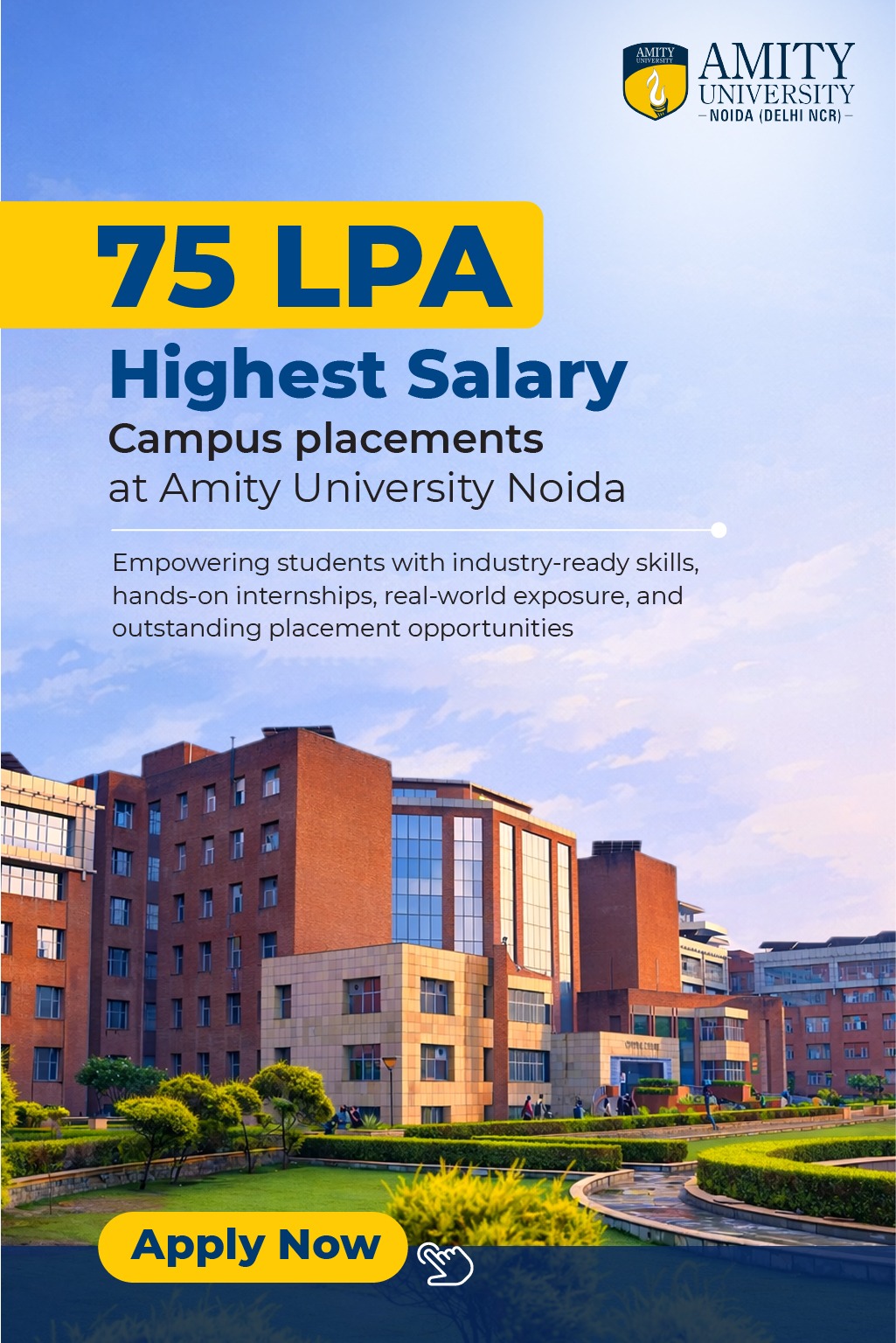
On top of that, the career services at this university show how valuable it is to blend academic theory with industry practices. It helps in giving placements in top firms.
Looking Ahead: Building A Culture Of Advanced Learning
India is moving toward a knowledge-based economy, where there'll be more need for skilled professionals, researchers, innovators, and leaders. While undergrad sets a good base, postgrad studies boost deep expertise, better pro networks, and job flexibility.
The issue isn't just getting more people enrolled. It's spreading the word, showing its worth, and making sure postgrad education stays tied to what industries want and what the future holds. Students should ask not if a master's degree is a must, but how further study can keep them up-to-date, flexible, and ahead in a complex world.


Amity University Noida's Official Blog: Your Destination for Career Guidance, Course Insights, Rankings, and Expert Tips for a Future Full of Possibilities.
Contact us: admissions@amity.co.in