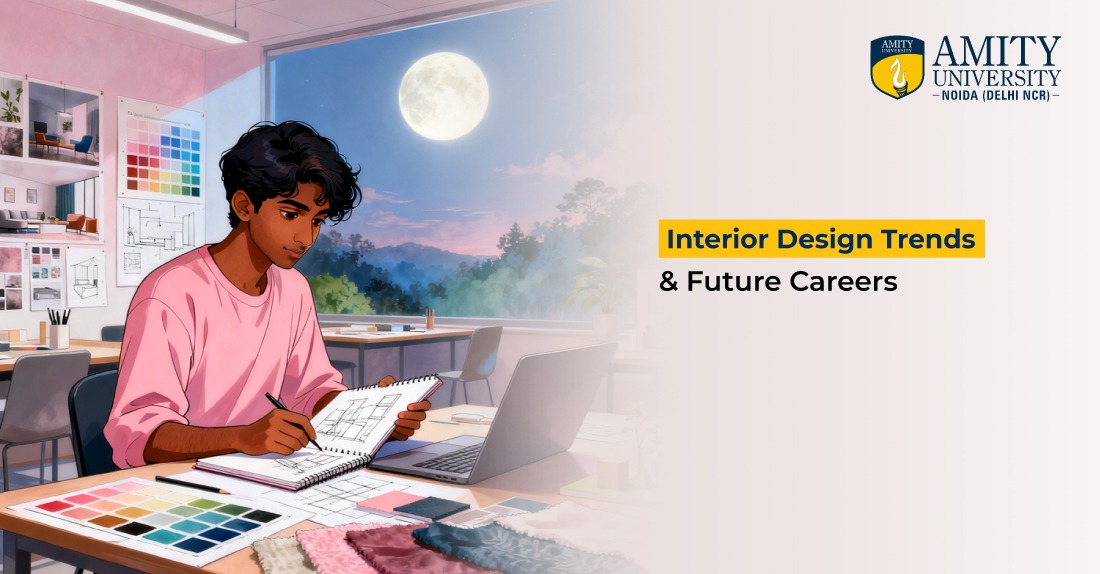
Smart homes with multifunctional spaces and sustainable designs, coupled with warm colour tones, are the latest trends in the world of interior design. Behind the scenes, technological tools like AR/VR and data-driven designs are transforming how interiors are visualised, created, and even personalised at the click of a button.
During the period between 2025 and 2030, India is expected to register a growth of 18 percent, in the interior design segment. This finding by Modor Intelligence is attributed to the rise of disposable incomes, urbanization, increasing population, and expansion of real estate, pan-India. Most significantly, the report highlights the role of technology as a great transformer in decision-making, efficiency, faster delivery, and design, which has fuelled positive changes in the interior design space.
No wonder then that the demand for trained interior design professionals is on the rise and courses in interior design are quite popular as they span multiple industries. From commercial, luxury, residential to customised spaces, this segment has something for anyone who has an eye for detail, innovation, creativity and design.
Bachelor of Interior Design
Bachelor of Interior Design is a comprehensive undergraduate program that focuses on the creative and technical aspects of interior design. The curriculum covers key topics such as space planning, furniture design, color theory, materials and finishes, lighting, and design software like AutoCAD and 3D modeling tools. Students develop a strong foundation in architectural design, aesthetics, and sustainable design practices. The program includes hands-on projects, internships, and industry exposure, allowing students to apply their skills in real-world settings. Graduates are prepared for careers as interior designers, design consultants, and project managers in residential, commercial, and institutional design sectors.
Careers
- Healthcare Interior Designer: Designs spaces such as wellness retreats, hospitals, clinics, and other healthcare facilities that offer a chance to heal, destress, and unburden the mind and body. These professionals use appealing designs that provide comfort, efficiency, a touch of nature and integrate natural lighting and other designs.
- Technical Designer: Uses precise technology and software tools like AutoCAD for visualisation, construction details and technical aspects like floor plans, elevations and other specifications are spot-on.
- Spatial Designer: Deploys human-centric design methodologies by integrating several design concepts like natural lighting, furniture, colour tones, defining spaces, ensuring accurate layouts and more.
- Colour Consultant: Uses his expertise in knowledge of colour psychology, its theory to help consumers choose their desired colours for homes and other spaces to create a new décor or enhance an existing one.
Trends
- Smart and Sustainable Homes: Over the last few years, many discerning buyers across age groups have been leaning towards sustainable and smart homes and townships that feature green technologies, which are safer, efficient with intelligent appliances like refrigerators, smart lighting, save on energy, and reduce bills. These include motion-activated lighting that turns on and off, etc.
- Modular Furniture: A report by Grandview Research has some interesting insights on modular furniture, which is both customizable and flexible. With rapid population explosion, urbanisation and migration within cities, there is a space crunch for homes. In this backdrop, there’s a need to have compact furniture that has multiple functionalities in both small and large spaces.
- Biophilic Design: This concept of connecting humans with nature is visible in the idea of integrated townships and modern homes. They are customising themselves to create green spaces, wellness corners, like planting Miyawaki forests to create an ecosystem that fosters physical and mental well-being. Internally, aspects like patterns and designs representing nature, the presence of plants, and ventilation for overall well-being.
- 'Customised green’ home: Recycled plastic lumber for decks, non-polluting organic chemicals for joints and adhesives, organic paints and sealants are the new heroes for interior design as they create a cooler environment and even a cooler look. For example, practices like upcycling shipping containers to create eco-friendly living spaces or décor are gaining ground.
Amity Edge
- Ticket to the world stage: Whether you’re aiming to be an insights researcher or a data miner, Amity provides internship opportunities with top industry giants and research projects.
- Toolkit for a Byte Hero: Students are encouraged to have a design thinking mindset by unearthing every possible solution or innovation to tackle real-world challenges through industry-live projects.
- Innovation Playground: Amity’s labs are equipped with globally competitive machines and technology. You will also learn in-demand skills like leadership, teamwork, risk-taking, risk management, agility, and flexibility.
- Placements: Amity University Noida's placements create benchmarks every year, from garnering Rs 2 crore annual job package to placement in 500 corporates in campus recruitment, including top Fortune 500 employers.
What’s the future?
With dynamic and evolving needs, designers are creating spaces that double up as homes, offices, and leisure and a hub for social activities.
FAQs
1. What is the eligibility criteria for the Interior Design Course?
The selection is done on the basis of Class XII (min 50%) score. Aggregate percentage is calculated on the basis of marks scored in English and three academic subjects. A student should have passed all the subjects of class XII from a recognized board.
2. What are the core subjects covered in this course?
These include Fundamentals of Interior Design, Digital Modelling, Graphical Design, Interior Design History, and Communication Skills.
3. What are the other specialisations after completing this course?
Graduates can pursue higher studies such as Master’s degrees in Interior Design, Architecture, or Urban Design. Specializations like Sustainable Design, Furniture Design, or Digital Architecture are also available. Additionally, certifications in software tools like AutoCAD or Revit can further enhance career prospects.
4. How much can I earn after pursuing a Bachelor's in Interior Design?
Freshers can earn between a range of Rs 2 LPA and Rs 6 LPA. Post-experience salaries can range from Rs 7 LPA to Rs 30 LPA and above.
5. What are the key skills required for this course?
An innovative and creative mind, reasoning, critical thinking, analytical thinking, communication, collaboration, empathy, keen observer, and presentation skills.