Best Engineering Colleges in India 2026: Rankings, Fees, Eligibility & Admissions
30-07-2026

The Indian higher education system is experiencing unprecedented changes, making the availability of modern academic programs, research, connections with large corporations, global collaboration, and multidisciplinary studies possible. Choosing the best university as future students prepare for admissions in universities in 2026 will determine their entire career and life path.
These days, the best universities aren't just about lectures anymore. They offer practical classes, push kids to start businesses, have spaces for inventing stuff, blend what industry needs into lessons, and back up job hunts hard. All this helps kids learn what they need to succeed everywhere in the world.
Here we will discuss the ten best Indian universities for 2026, rated by how great their teaching is, how much industry input they get, what they contribute to research, their facilities, exposure to other countries, results from past students, and simply how good the overall learning experience is there.
Founded in 1909, this premier research center and an institution of higher learning continues to enjoy respect in India for its work in science, engineering, and multidisciplinary research. The institute is consistently among the best academic institutions in the country.
In terms of facilities for research, IISc provides state-of-the-art labs, eminent professors, generous research funding, collaborations, and partnerships with some of the finest institutes around the world.
USP: India's go-to place for advanced research and innovation in science.
This institute, now a top technology institution of India, even offers a variety of courses beyond engineering, such as management, data science, entrepreneurship, and more.
The dynamic start-up ecosystem, research centers, and strong industry ties enable students not only to excel academically but also to get equipped to deal with real-world problems when they step into the corporate sector.
USP: Engineering excellence, research dominance, and entrepreneurship.
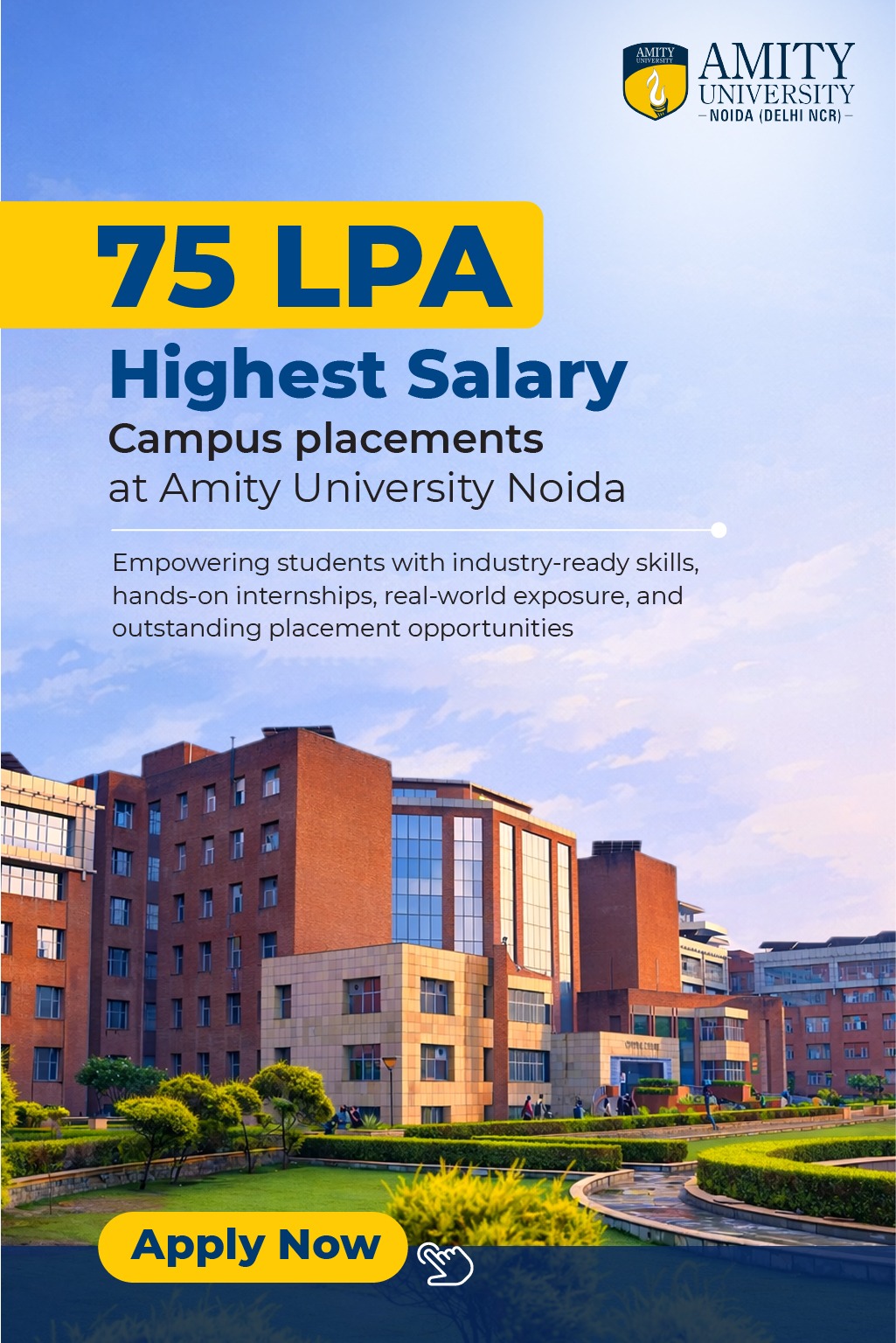
Today, Amity University Noida is considered one of the best private universities in India. This is because the institution integrates academic knowledge with practical experience and relevant topics within the framework of modern industries. For example, the institution provides its learners with different programmes, including internships and projects.
Amity University has numerous partnerships with foreign institutions and ensures that its courses remain current and relevant to the demands of various industries. The university is also equipped with state-of-the-art facilities and spaces for research. Thanks to all of these factors, Amity attracts many students who hope to be hired in a good firm.
USP: Learning and industry exposure.
The multidisciplinary character and global vision of the university have brought recognition for OP Jindal Global University. The institution offers various courses in law, business, international affairs, public policy, journalism, psychology, and liberal arts.
International cooperation with leading foreign institutions provides students of this university with multiple learning opportunities, such as exchanges, joint research, and internships. Critical thinking and leadership are among OP Jindal Global University's main priorities.
USP: Globally oriented multidisciplinary education.
VIT has become one of India's most sought-after private universities, especially for engineering and technology programmes. The university emphasizes innovation, research, industry partnerships, and practical learning experiences.
Its placement network attracts numerous multinational companies, while research centres and innovation labs encourage students to explore emerging technologies and entrepreneurial ventures.
USP: Industry-driven technical education supported by strong placement outcomes.
Ashoka University has transformed liberal arts education in India by promoting interdisciplinary learning and academic flexibility. Students can explore multiple disciplines before choosing their specialization, encouraging broader intellectual development.
The university's emphasis on critical inquiry, research, communication skills, and leadership development prepares graduates for diverse career pathways in business, public policy, academia, entrepreneurship, and social impact sectors.
USP: A pioneering liberal arts model focused on critical thinking and interdisciplinary education.
MAHE is well-known for its comprehensive educational system that covers medicine, engineering, management, health sciences, humanities, and design. It has a lot to offer through its global partnerships, research work, and innovative learning methods, in addition to being a place where many students from across India and other countries come to pursue their higher studies.
USP: Holistic multidisciplinary education with the help of international connections.
BITS Pilani is highly regarded for its academic rigor, innovative culture, and dynamic curriculum. The Practice School program of BITS Pilani helps students gain industry experience through internships and workplace exposure. Alumni of the university hold senior positions in various multinational companies, startups, academia, and research organizations.
USP: Industry experience due to the Practice School program.
The reputation of symbiosis is very high in the fields of management, law, media, economics, computer science, and international relations. The emphasis at the university on practical learning, interaction with industries, and international experience ensures that students are able to develop professional skills along with theoretical skills. Students have state-of-the-art infrastructure, hands-on experience, and a diverse campus.
USP: Professionally oriented education with industry support.
Shiv Nadar University has earned a good reputation for its research-oriented approach and diverse academic programs. Students are encouraged to work on novel projects and conduct research. This university has an orientation towards technology, innovation, entrepreneurship, and liberal arts to enable students to tackle problems faced by the world today.
USP: Research-oriented learning environment.
Rankings aside, the following considerations should be taken into account by the students while making their decision:
1. Academic Excellence- This includes evaluating curriculum, expertise of faculty, and academic reputation of institutions.
2. Exposure to Industry- Students need internships, live projects, corporate collaborations, and job placements from universities.
3. Research Facilities- The research environment of an institute plays a crucial role in innovation and the development of skills.
4. International Exposure- Collaborations, study abroad programmes, etc., could add value to the careers of students.
5. Infrastructure- Modern laboratories, libraries, innovation hubs, etc., make for better academic environments.
Career Prospects- Placement rates, successful alumni, entrepreneurial guidance, and industry connections add to career prospects.
As industries increasingly seek professionals with interdisciplinary knowledge, practical skills, global awareness, and adaptability, universities are playing a larger role in shaping future-ready graduates. Institutions that combine academic excellence with experiential learning, innovation, research, and industry integration provide students with a strong foundation for long-term success.
The top 10 universities in India highlighted above represent diverse strengths from engineering and research excellence to liberal arts, global education, entrepreneurship, and multidisciplinary learning. Students should align their university choice with their academic interests, career aspirations, learning preferences, and future goals.



Amity University Noida's Official Blog: Your Destination for Career Guidance, Course Insights, Rankings, and Expert Tips for a Future Full of Possibilities.
Contact us: admissions@amity.co.in