
The Secret to Career Success: A Step-by-Step Guide to Continuous Learning
31-12-2025

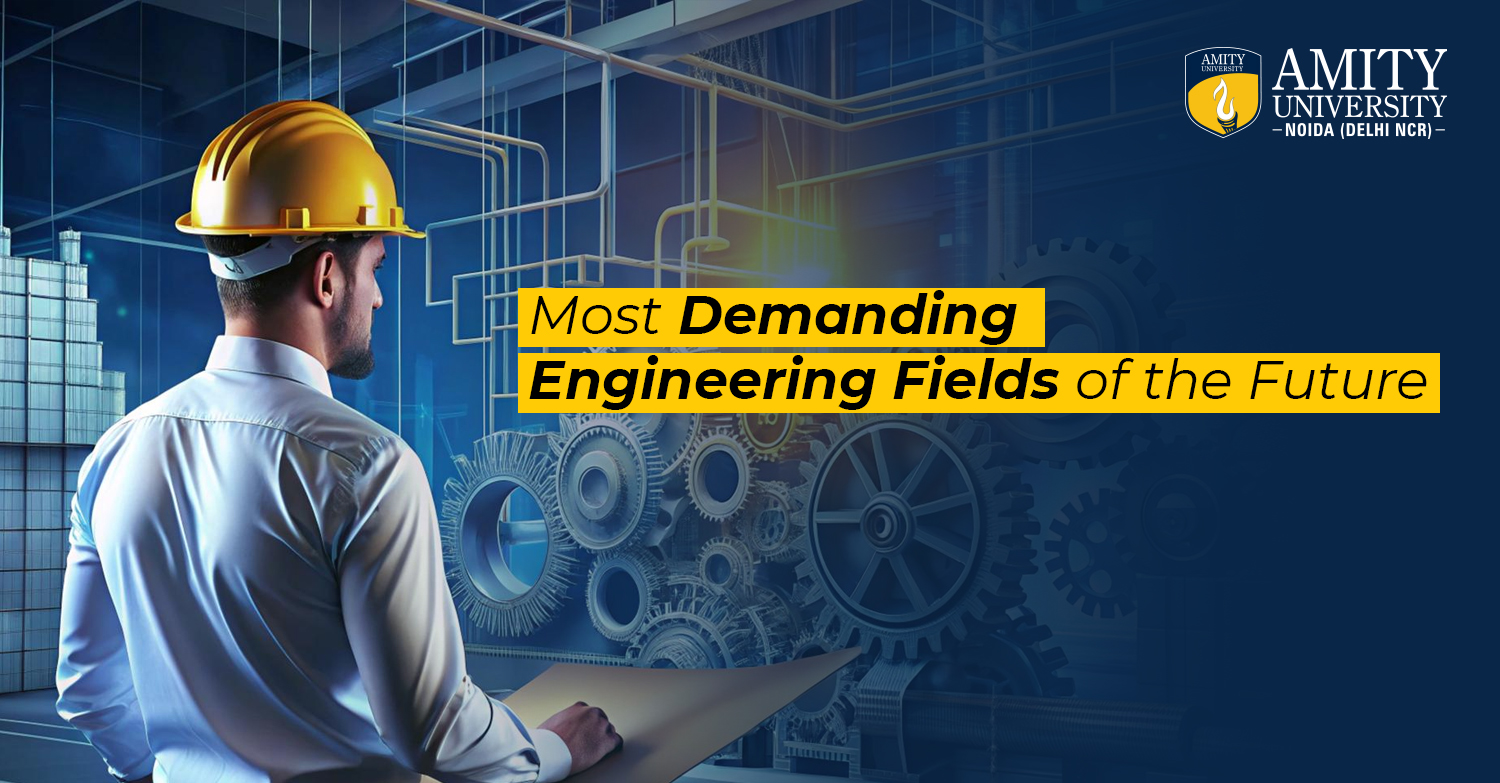
Engineering is developing very quickly with the emergence of new technologies, changes in the world economy, and other factors influencing its development. From artificial intelligence and robotics to renewable energy and advanced electronics, there appear to be many specializations that did not even exist ten years ago. Thus, future engineers should know what areas are going to develop so that they can make a wise choice regarding the courses and skills which they would like to gain.
The most challenging engineering area in the future is likely to change depending on the technological innovations and industrial requirements of that time. Moreover, it would be rather unwise for students to limit themselves to the consideration of current tendencies. It would be much better if students paid attention to engineering areas associated with AI, data, automation, cyber security, energy, and manufacturing.
Artificial Intelligence (AI) and Machine Learning (ML) have changed the way products are made and the processes that organizations go through. These engineers create intelligent machines that can analyze data, recognize patterns, make predictions, and perform more advanced tasks.
Those who would like to learn more about it can choose machine learning, deep learning, natural language processing, computer vision, and AI systems. Good knowledge of math, statistics, programming, and data structures will be useful here. Possible careers are AI Engineer, Machine Learning Engineer, Data Scientist, Computer Vision Engineer, and AI Researcher.
The fact is that software still forms the backbone of present-day organizations, digital services, and technological advancements. This means that computer science and software engineering continue to represent some of the best options when it comes to engineering fields.
It covers programming, algorithms, cloud computing, databases, software engineering, operating systems, and distributed systems. The greater demand for digital services from organizations makes it possible to find positions in many industries, including technology, financial institutions, healthcare, education, retailing, and others.
Some of the specializations include cloud computing, full-stack development, DevOps, and distributed systems.
Every digital interaction creates data, but organisations need experts to help them in collecting, organising, processing, and analysing data. Data engineering is concerned with constructing the system which will make working with datasets easy for businesses.
Students can acquire skills in databases, coding, data pipelines, cloud computing platforms, statistical analysis, and big data technologies. This subject is particularly important for organisations using data to improve their processes, understand their clients, and make strategic decisions. Possible jobs after completing this major include Data Engineer, Big Data Engineer, Data Analyst, and Analytics Engineer.
Automated technology is impacting manufacturing, logistics, medicine, agriculture, and other fields. Robotics Engineering involves a combination of Mechanical Engineering, Electronics, Programming, and Control Systems for creating machines that can do tasks automatically.
Robotics engineering encompasses Industrial Robots, Autonomous Vehicles, Drones, Robotic Vision, and Intelligent Manufacturing. Those who like working with hardware and software will definitely find this field very intriguing.
There are many career paths available, such as Robotics Engineer, Automation Engineer, Control Systems Engineer, and Robotics Software Developer.
Organizations have become more reliant on interdependent systems, hence increasing the need for securing their digital infrastructure. There are cybersecurity professionals involved in ensuring network, application, device, cloud, and information system security from cyber threats.
The career path involves knowledge of networks, operating systems, cryptography, programming, and security architecture. Professionals can venture into roles such as threat detection, penetration testing, security operations, and information security.
Moreover, the cybersecurity career is not restricted to the tech industry since opportunities exist in fields such as banking, healthcare, government, telecommunications, and others.
Semiconductors form the basis of smartphones, computer systems, electric vehicles, industrial machinery, communication, and new-age technologies. As the scope of the electronics industry grows globally, engineers who have knowledge about semiconductor technology and electronics will be able to make valuable contributions towards product development and manufacturing.
Some of the topics which students may specialize in are VLSI design, embedded systems, microelectronics, semiconductor chip design, and electronic circuit design. This specialization is especially ideal for students who want to combine hardware and electronics.
Job prospects include Semiconductor Engineer, VLSI Engineer, Embedded Systems Engineer, and Electronics Design Engineer.
The move toward cleaner energy sources means that engineering solutions for solar energy, wind energy, energy storage, electric mobility, and sustainable infrastructure are gaining in significance. Renewable energy engineers deal with the design, development, and improvement of energy systems to make the process of energy generation efficient and sustainable.
Environmental engineers also cover topics related to waste management, water treatment, pollution control, and resource conservation. This means that students who are concerned about sustainability can consider a career in engineering.
Biomedical engineering integrates engineering concepts in the area of health care and medicine. This field encompasses design of medical devices, diagnostic tools, rehabilitation devices and other solutions that would aid in health care delivery.
This field may include electronics, biomaterials, biomechanics, medical imaging, and computation. With the increasing role of technology in the health care industry, engineers with a biomedical background could contribute towards advancement in medical technology.
Aerospace engineering remains an advancing field that evolves in conjunction with advancements in aviation, unmanned systems, satellites, and space. Aerospace engineers deal with aircraft, spacecraft, propulsion, avionics, and other related technologies.
Physics, mathematics, and advanced engineering systems are among the fields that students interested in aerospace engineering can specialize in, including aerodynamics, propulsion, avionics, and aerospace structures.
The automotive sector is facing one of the greatest technological shifts with electric vehicles, connected cars, and self-driving technology gaining traction. This calls for the need to have engineers with experience in electric powertrain design, batteries, electronics, and software for vehicles.
Career options in this field are EV Engineer, Battery Engineer, Automotive Electronics Engineer, and Vehicle Systems Engineer.
In case of Amity University Noida, students will have an opportunity to study engineering education through the technology-based streams along with technical knowledge and skills. Getting familiar with the upcoming fields, project-based and industry-based learning can assist students in understanding the application of engineering concepts in practical situations. For the students who need to make a decision regarding the stream they will pursue in engineering, studying about the program can be helpful for them.
Engineers of the future will have a greater need to diversify into interdisciplinary areas. The development of AI will impact manufacturing, healthcare, finance, and transportation; robotics will be combined with software development; renewable energy sources will need progress in storage and infrastructure; and semiconductors will continue to play a vital role in digital innovations.
This way, it will not be necessary for engineers to focus exclusively on one area of technology at a time. An engineer with expertise in AI and robotics, for instance, may pursue the development of intelligent autonomous systems, and a specialist with an electronics and software background may contribute to embedded AI and semiconductors.
The best career opportunities for engineers will require constant learning to adapt to technological changes. Developing a solid base during undergraduate studies and building up more specialized skills may thus prove more important than simply choosing a popular field.




Amity University Noida's Official Blog: Your Destination for Career Guidance, Course Insights, Rankings, and Expert Tips for a Future Full of Possibilities.
Contact us: admissions@amity.co.in