BBA After 12th: Benefits of Studying BBA and Top Reasons to Choose This Career-Ready Course
30-11-2025

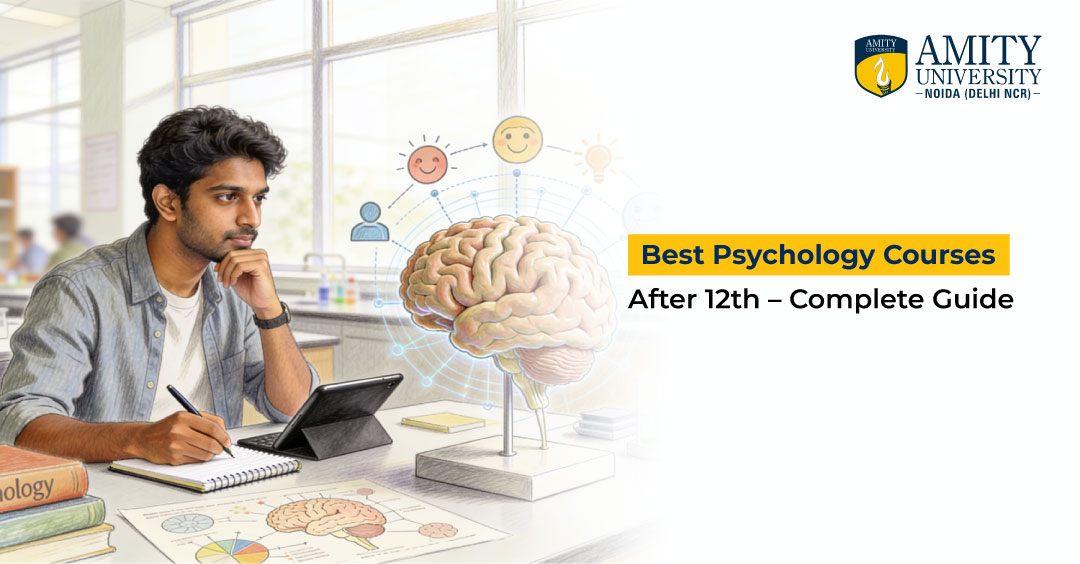
There is an increasing emphasis on mental well-being, human behavior, emotions, and workplace wellness, which provides wonderful chances for students who want to study psychology. Psychology graduates are making contributions in many fields, including healthcare, education, corporate organizations, and research institutes, to name a few, worldwide.
Psychology as a subject gives students scientific knowledge as well as practical skills related to human beings. The knowledge that this subject teaches helps students to comprehend the processes of learning, thinking, feelings, and behavior of humans, as well as prepare them for rewarding careers.
The following guide explains the most appropriate psychology courses after class 12 for 2026 with respect to eligibility requirements, course highlights, career prospects, and future scope.
Psychology is a science that studies human behavior, emotions, and mental processes. With increased awareness regarding mental health conditions, there has been an increasing requirement for trained psychologists by various organizations. Some important factors why students opt for psychology are:
Plenty of job options
High demand for mental health specialists
Research and behavioral science careers
Importance in the education and healthcare domains
Career in higher education
Societal impact through the study
A student from any stream, be it Arts, Commerce, or Science, can take up psychology after class 12th, according to the criteria of the institution.
Several undergraduate psychology programs are available for students who wish to build expertise in human behavior and mental processes.
B.A. (Hons) Applied Psychology is among the most sought-after psychology courses after 12th. The program focuses on applying psychological principles to real-life situations and professional settings.
Students learn about:
Psychological theories and concepts
Human behavior and personality
Cognitive processes
Counseling techniques
Social psychology
Organizational behavior
Research methods and statistics
3-4 years (depending on the university structure)
Students interested in counseling, behavioral research, organizational psychology, and social development.
Behavioral Analyst
Human Resource Executive
Career Counselor
Research Assistant
Child Development Specialist
Community Welfare Professional
The course also provides a strong foundation for postgraduate studies in psychology and related disciplines.
B.A. (Hons) Clinical Psychology focuses on understanding psychological disorders, mental health conditions, emotional well-being, and therapeutic approaches.
The curriculum typically covers:
Abnormal Psychology
Clinical Assessment
Developmental Psychology
Psychopathology
Counseling Skills
Mental Health Interventions
Psychological Testing
3-4 years
Students interested in mental healthcare, counseling, psychotherapy, and clinical practice.
Mental Health Associate
Rehabilitation Support Professional
Clinical Research Assistant
Behavioral Health Coordinator
Psychological Assessment Assistant
The program serves as an excellent stepping stone toward advanced studies and professional training in clinical psychology.
A Bachelor in Clinical Psychology is designed for students who wish to develop a strong understanding of mental health, emotional disorders, and therapeutic practices.
The program combines theoretical learning with practical exposure through projects, case studies, and internships.
Clinical Psychology Foundations
Psychological Assessment
Mental Health Studies
Counseling Psychology
Personality Development
Behavioral Interventions
Ethics in Psychology
Graduates may explore opportunities in:
Hospitals
Wellness Centers
Rehabilitation Facilities
NGOs
Educational Institutions
Research Organizations
Many students also pursue master's programs and specialized professional certifications after graduation.
A traditional B.A. Psychology program provides a broad introduction to psychology and its various branches.
Students gain knowledge in:
Social Psychology
Educational Psychology
Cognitive Psychology
Experimental Psychology
Personality Theories
Research Techniques
Education Support Services
Human Resource Management
Training and Development
Research Assistance
Social Work Organizations
The degree provides flexibility for students interested in pursuing diverse career paths.
Students interested in the scientific and research-oriented aspects of psychology often choose B.Sc. Psychology.
The course emphasizes:
Biological Psychology
Neuroscience
Cognitive Science
Research Methodology
Data Analysis
Psychological Measurement
Research Laboratories
Healthcare Organizations
Academic Institutions
Behavioral Science Projects
Data-Driven Psychological Research
This program is particularly suitable for students who enjoy scientific inquiry and evidence-based analysis.
Eligibility requirements may vary among institutions; however, the common criteria include:
Completion of Class 12 from a recognized board
Minimum qualifying marks as prescribed by the university
Students from Arts, Commerce, and Science streams may apply
Entrance examinations or interviews may be required by some institutions
Students should review specific university admission guidelines before applying.
Psychology education goes beyond classroom learning and helps students develop valuable professional skills.
Some of the key skills include:
Critical thinking
Communication skills
Active listening
Problem-solving abilities
Emotional intelligence
Research and analytical skills
Interpersonal effectiveness
Ethical decision-making
These competencies are highly valued across industries and professional environments.
The career field for psychologists is continuously expanding, with more and more firms recognizing the significance of psychological well-being and human behavior. Career paths in psychology include roles within:
Students can further strengthen their expertise through advanced studies such as:
M.A. Psychology
M.Sc. Psychology
Counseling Psychology Programs
Organizational Psychology
Child Psychology
Educational Psychology
Behavioral Science Programs
Higher education often opens pathways to specialized roles and research opportunities.
In today’s time, which prioritizes mental well-being, psychology is gaining increasing importance due to its application in healthcare, human resource management, education, technology, business, and more. Understanding behavioral patterns, motivations, and interpersonal processes enables individuals who specialize in this field to make valuable contributions to society.
Considering the rising awareness about the importance of psychology and the available job opportunities, this field provides promising academic prospects.
Selecting the right psychology courses after 12th will help create a solid base for one's future success in life. Courses like B.A. (Hons) Applied Psychology, B.A. (Hons) Clinical Psychology, and Bachelor's in Clinical Psychology can equip students with everything necessary to prosper in their respective fields. With a rising demand for psychologists in the year 2026, students get many great chances to excel both academically and socially.





Amity University Noida's Official Blog: Your Destination for Career Guidance, Course Insights, Rankings, and Expert Tips for a Future Full of Possibilities.
Contact us: admissions@amity.co.in