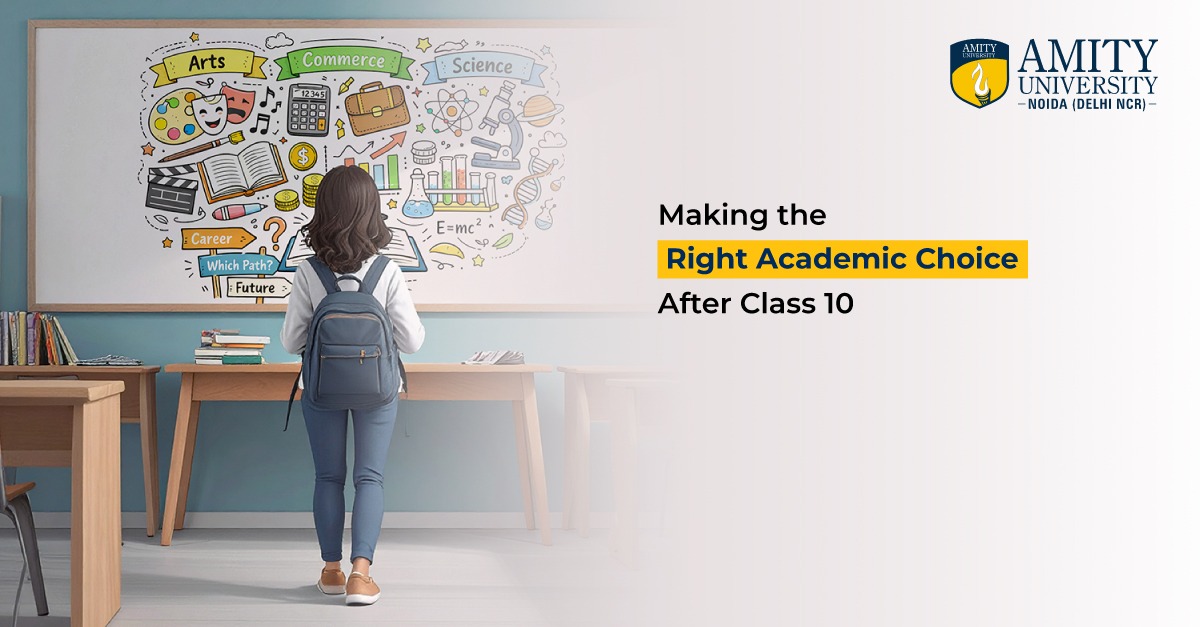
After completing Class 10, students are often expected to make decisions that feel far bigger than their current understanding of careers or personal strengths. With multiple streams, subjects, and opinions influencing this phase, it is easy to feel unsure about what comes next. However, the purpose of choosing courses after Class 10 is not to finalise a career; it is to begin discovering where interests, abilities, and learning styles truly lie. The right academic choices at this stage can help students explore, experiment, and gradually gain clarity about their future direction.
Why Discovery Matters After Class 10
At 15 or 16, most students are still learning about themselves. Interests evolve with exposure, confidence develops through experience, and strengths often emerge gradually. Courses chosen after Class 10 should therefore offer room to grow rather than forcing early specialisation.
Discovery-oriented learning helps students:
- Identify subjects they genuinely enjoy
- Understand how they learn best
- Build confidence through exploration
- Make informed decisions later in higher education
Science Courses: Exploring Logic, Curiosity, and Problem-Solving
Science-based courses after Class 10 suit students who enjoy questioning, analysing, and understanding how things work. Subjects like physics, chemistry, mathematics, and biology develop analytical thinking and conceptual clarity.
Science streams help students discover:
- Comfort with structured problem-solving
- Interest in research or technical learning
- Aptitude for logical reasoning and experimentation
Even students who later move into interdisciplinary or applied fields benefit from the strong foundation science provides.
Commerce Courses: Understanding Systems, Numbers, and Decision-Making
Commerce-oriented courses allow students to explore how businesses, markets, and organisations function. Subjects such as economics, accounting, and business studies encourage analytical thinking combined with practical application.
Commerce courses help students discover:
- Interest in management, finance, or entrepreneurship
- Strengths in data interpretation and decision-making
- Ability to connect theory with real-world systems
This stream supports students who enjoy structured thinking with real-life relevance.
Arts and Humanities: Discovering Perspective, Creativity, and Communication
Arts and humanities courses are ideal for students who enjoy reading, discussion, writing, and understanding society. Subjects like history, psychology, political science, literature, and sociology encourage reflection and critical thinking.
These courses help students discover:
- Creative and expressive strengths
- Communication and analytical abilities
- Interest in people-centric or policy-driven fields
Skill-Based and Design-Oriented Courses: Learning by Doing
Some students learn best through hands-on experiences. Skill-based and design-focused courses allow learners to explore creativity, application, and practical problem-solving.
These courses help students discover:
- Comfort with experiential learning
- Creative and technical abilities
- Preference for applied over theoretical study
The Role of the Learning Environment
Discovery-driven learning becomes most effective when students are supported by institutions that value adaptability and broad exposure. Universities like
Amity University Noida focus on creating such learning ecosystems, where students can build foundational skills, explore interests across domains, and gain clarity over time, an approach that supports long-term academic confidence. The right environment allows students to evolve, reflect, and grow without the pressure of having everything figured out too early.
Conclusion
Courses chosen after Class 10 should help students learn more about themselves, not limit their options. Whether through science, commerce, arts, or skill-based pathways, discovery-oriented education builds confidence and clarity over time. When supported by flexible learning environments, students are better prepared to make informed decisions as they move toward higher education and future careers.
FAQs
1. Are courses after Class 10 meant to decide a final career?
No. They are meant to help students explore interests and strengths while building academic foundations.
2. Which stream is best for discovering strengths?
There is no single best stream. The right choice depends on a student’s interests, learning style, and curiosity.
3. Can students change direction later if they discover new interests?
Yes. Many students refine or shift their academic paths as they gain exposure and confidence.
4. How important is exposure compared to subject choice?
Exposure is extremely important, as it helps students understand what they enjoy and where they perform best.
5. What role do universities play in discovery-driven learning?
Universities that encourage interdisciplinary learning and adaptability help students gain clarity and long-term academic confidence.