
From Script to Screen: How Film Students Bring Stories to Life
31-03-2026

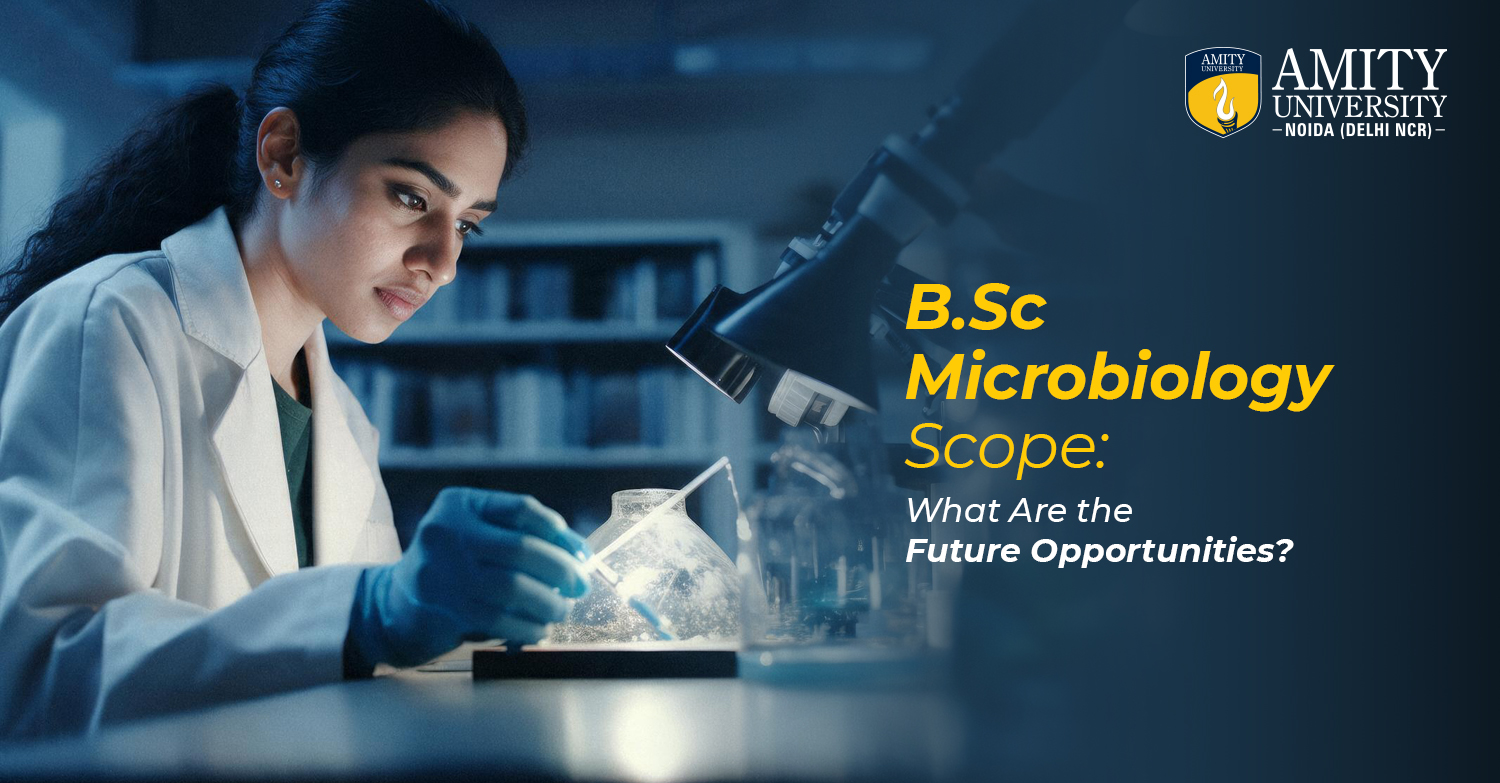
Microbiology is much more than the study of bacteria in the lab. Be it for the production of medicines, food safety, or environmental monitoring, microorganisms have become very crucial in different industries. Hence, a BSc course in microbiology can be suitable for students who have a liking for biological sciences and solving problems through scientific means. With the scope of BSc Microbiology in several areas, graduates have plenty of avenues to pursue.
A typical B.Sc. Microbiology programme will cover topics related to microbes, their morphology, growth, physiology, genetics, and their interactions with man and the environment. Apart from theoretical topics, laboratory-based learning is also important since microbiology entails understanding various techniques such as culturing, microscopy, analysis and identification of microbes.
The undergraduate microbiology programme will normally involve studies in bacteriology, microbial physiology, biochemistry, genetics, environmental microbiology, immunology, virology, and industrial microbiology among others. The actual curriculum will vary according to the institution, but the main aim will be to offer students scientific knowledge which they can apply in health and industries among other places.
In Amity University Noida, the B.Sc. (Hons.) Microbiology programme will normally be a three-year degree programme. This programme will have a curriculum covering topics on Introduction to Microbiology & Microbial Diversity, Basics of Bacteriology, Microbial Biochemistry & Cell Biology, Microbial Genetics & Genomics, Industrial Microbiology and Microbial Quality Control in Food and Pharmaceutical Industries. There are also several other topics that can be covered, like clinical microbiology, food & dairy microbiology, pharmaceutical microbiology, microbial bioinformatics, forensic microbiology, microbiome and cosmetic microbiology.
The future opportunities in microbiology will not be restricted to one particular industry. Microorganisms are useful for human health, for food production, drug manufacturing, agriculture, and environmental management. Thus, there is a need for specialists who can perform their functions in the laboratory setting and analyze microorganisms and other biological materials.
1. Health care and diagnostic laboratories- Health care is one of the oldest industries where graduates in microbiology can find applications. Specialists in this area work with biological materials and microorganisms, providing assistance in infection diagnosis and further studying them.
Students will be able to find positions in diagnostic laboratories, hospitals, and health care institutions depending on job requirements and legislation.
2. Pharmaceutical industry- The pharmaceutical industry also provides numerous opportunities. This industry involves microbiology in quality control and assurance, contamination detection, sterile manufacturing, and microbial analysis.
There are jobs like quality control analyst, laboratory assistant, or research assistant where students can use their knowledge in microbiology. Graduates interested in pharmaceutical R&D will benefit from postgraduate courses in microbiology or biotechnology.
3. Food and Beverage Industry- Food safety has a significant relation with microbiology, where microorganisms may affect the quality of food, its fermentation, spoilage, and safety. As such, microbiological testing becomes one of the important components in the food industry.
The graduates may seek careers in the field of testing for food quality laboratories, quality assurance departments, and food manufacturers. The knowledge may come in handy in such fields as microbial testing, quality assurance, hygiene testing and food safety.
4. Environmental Microbiology- Moreover, there is also a field of microbiology that deals with environmental management. It includes microbiology of water quality, waste management, microbial ecology and bioremediation.
Thus, the students who are interested in the issue of sustainability may take into account such career and research opportunities as environmental monitoring, water testing and waste treatment.
5. Research and Development- One of the ways to apply knowledge is to participate in research and development. One may be employed as a research assistant while studying and then obtain postgraduate education before starting research work.
Fields to consider include microbial genetics, infections, antibiotic resistance, industrial microbiology, microbiomes, biotechnology, and environmental microbiology. The increasing relationship between microbiology and information technology gives rise to the possibility of working with microbial bioinformatics.
6. Agriculture and Allied Industries- Microbiology can be applied in agriculture by studying soil microorganisms, plant diseases, fertilizers and interactions between organisms. If a graduate is specialized in something else, one should look for the chance to work in agricultural research, soil analysis and production of microbial products.
It is especially relevant in the field of sustainable agriculture as microorganisms may help in soil fertility and biological activity.
7. Government and Research Institutions- The graduates from the field of microbiology also have options of joining government labs and other such research institutions. The requirements for joining these organisations may vary, and hence students should refer to the required qualifications for each individual role. For those who wish to opt for a research-based career, further studies and competitive examinations or research fellowships may help in achieving that goal.
The kind of job designation available to a graduate depends upon his qualifications, skills, and experience. Some of these are:
|
Career Area |
Possible Roles |
|
Healthcare |
Laboratory Professional, Microbiology Assistant |
|
Pharmaceuticals |
QC Analyst, Microbiology Assistant |
|
Food Industry |
Food Quality Analyst, QC Professional |
|
Research |
Research Assistant, Laboratory Researcher |
|
Environment |
Environmental Microbiology Professional |
|
Biotechnology |
Laboratory Associate, Research Assistant |
|
Agriculture |
Microbiology/Soil Testing Professional |
|
Education |
Academic Support or Teaching Roles |
Consider the above professions to be more like career paths than actual job positions because of differences in professional standards across clinical, research, industry, and regulated laboratories.
The bachelor’s degree may serve as the starting point for several laboratory and quality-based positions. However, further education can prove to be quite beneficial for students who wish to have a more focused career path.
Some popular choices include:
Master of Science (M.Sc.) in Microbiology for advanced specialisation in microbiology
Master of Science (M.Sc.) in Biotechnology for an understanding of wider fields of biotechnology and molecular science
Master of Science (M.Sc.) in Biochemistry/Life Sciences for other scientific career options
Various postgraduate courses in specialities like clinical research, bioinformatics, or food technology
Research-oriented career path through various competitive exams and fellowship programs
For instance, M.Sc. Microbiology is one of the postgraduate programs available at Amity University Noida.
Before making an application, it is imperative to thoroughly understand the selection criteria of the desired institution. In the case of the B.Sc. (Hons.) Microbiology programme from Amity University Noida, the present eligibility criterion entails Class XII with Biology or Biotechnology along with at least 60% marks in Biology/Biotechnology for the non-sponsored category. According to the selection procedure of this programme, the candidates have to appear in a personal interview conducted.
When preparing for admission to BSc Microbiology programmes, it is also recommended to take a look at the current programme description, application deadline, eligibility criterion, and admission procedure on the university's official site.
The scope of BSc Microbiology is wide; it covers the health care sector, pharmaceutical companies, food safety, environmental science, agriculture, biotechnology, and the research sector. As for the students who are fascinated by microorganisms and experimental science, this degree may become the foundation of their career as well as a further educational path. It is up to individual choice to decide whether to work in industry or proceed to an MSc and even research in a particular area of microbial sciences.







Amity University Noida's Official Blog: Your Destination for Career Guidance, Course Insights, Rankings, and Expert Tips for a Future Full of Possibilities.
Contact us: admissions@amity.co.in