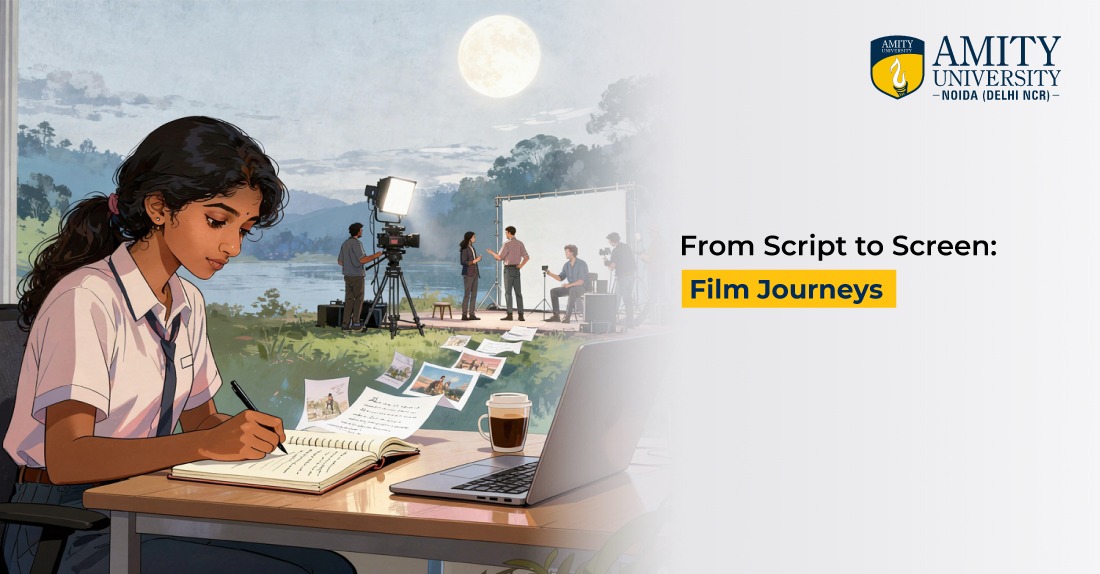
From Script to Screen: How Film Students Bring Stories to Life
31-03-2026

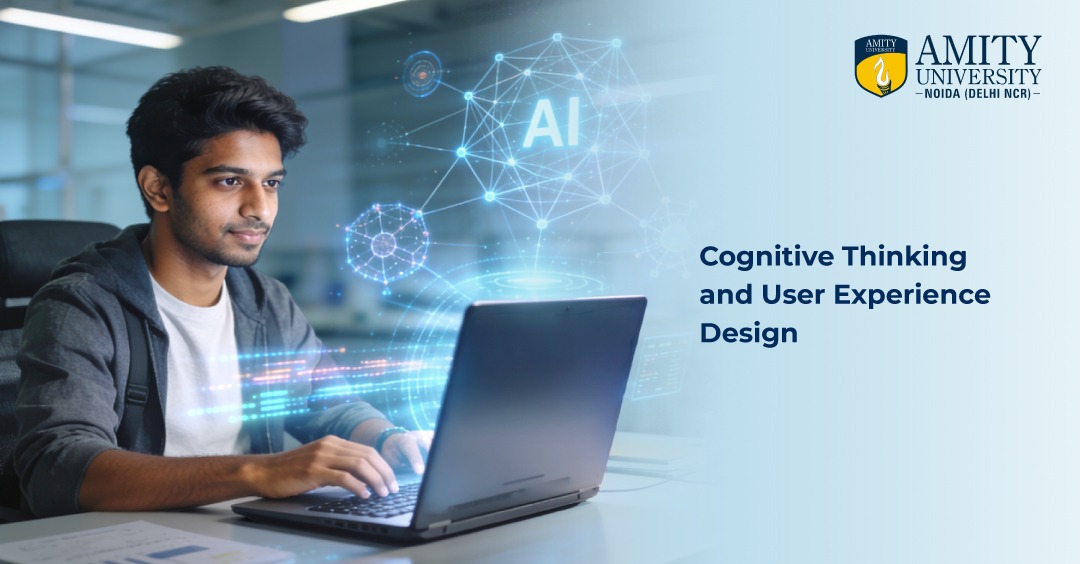
Calm interfaces are the new cool these days. The colours, reduced notifications and simple layouts on healthcare apps are scaling down stress. The result? No device burnout, better focus and mental outcomes. By 2030, AI is expected to customise 90% user interfaces and adopt greater real time adoption in devices. That’s the beauty of user experience design.
Offered by the Amity School of Design, this program prepares students to design intuitive, meaningful, and human-centred digital experiences. It is a strong choice for aspirants comparing the best university for BDes User Experience Design in India and asking which university is best for BDes User Experience Design in India.
Core Subjects: UX design fundamentals, user research, information architecture, interaction design, sketching, and visual composition. Clear BDes User Experience Design course details and curriculum and a structured BDes User Experience Design syllabus for undergraduate programme ensure progressive learning from concept to execution. Studio-based learning through the UX Design Studio enables students to apply theory to real design problems using a user-centred approach.
Did you know that designers use cognitive bent to enhance user experiences? Here’s how:
Familiarity effect: Is raised when patterns, colour schemes and conventional layouts are used for creating relatability.
Gamification: Use rewards or points to keep the users hooked.
Simplifying decision-making: By reducing choices, highlighting key features using bright colors, and placing interactive elements in easily accessible areas.
Catalyzing user actions: By crafting messages that give a sense of urgency—like limited time offer—to encourage quick action.
User Experience (UX/UI) Designer: Designs products for visual appeal and easy interaction.
UX Writer: Crafts actionable communication for users like menu, error messages and others.
Product Designer: Handles everything from manufacturing, completion, launch and delivery of a product.
Interaction Designer: Makes a seamless connection between a user and digital platform using different tools like arrows, clicks etc.
Curriculums with Corporate Accent – What’s trending, what do people want, new roles and careers, workplace skills and futuristic skills are also honed.
Innovation Playground: Our labs which are equipped with globally competitive machines and technology. Besides technical prowess, you will pick up in-demand skills like leadership, teamwork, risk taking, risk management, agility and flexibility.
Golden Visa to Careers – Be battle ready for any career you choose, learn networking with soft skills and tech edge.
Toolkit for a Byte Hero: Students are encouraged to have a design thinking mindset by unearthing every possible solution or innovation to tackle real-world challenges through industry-live projects.
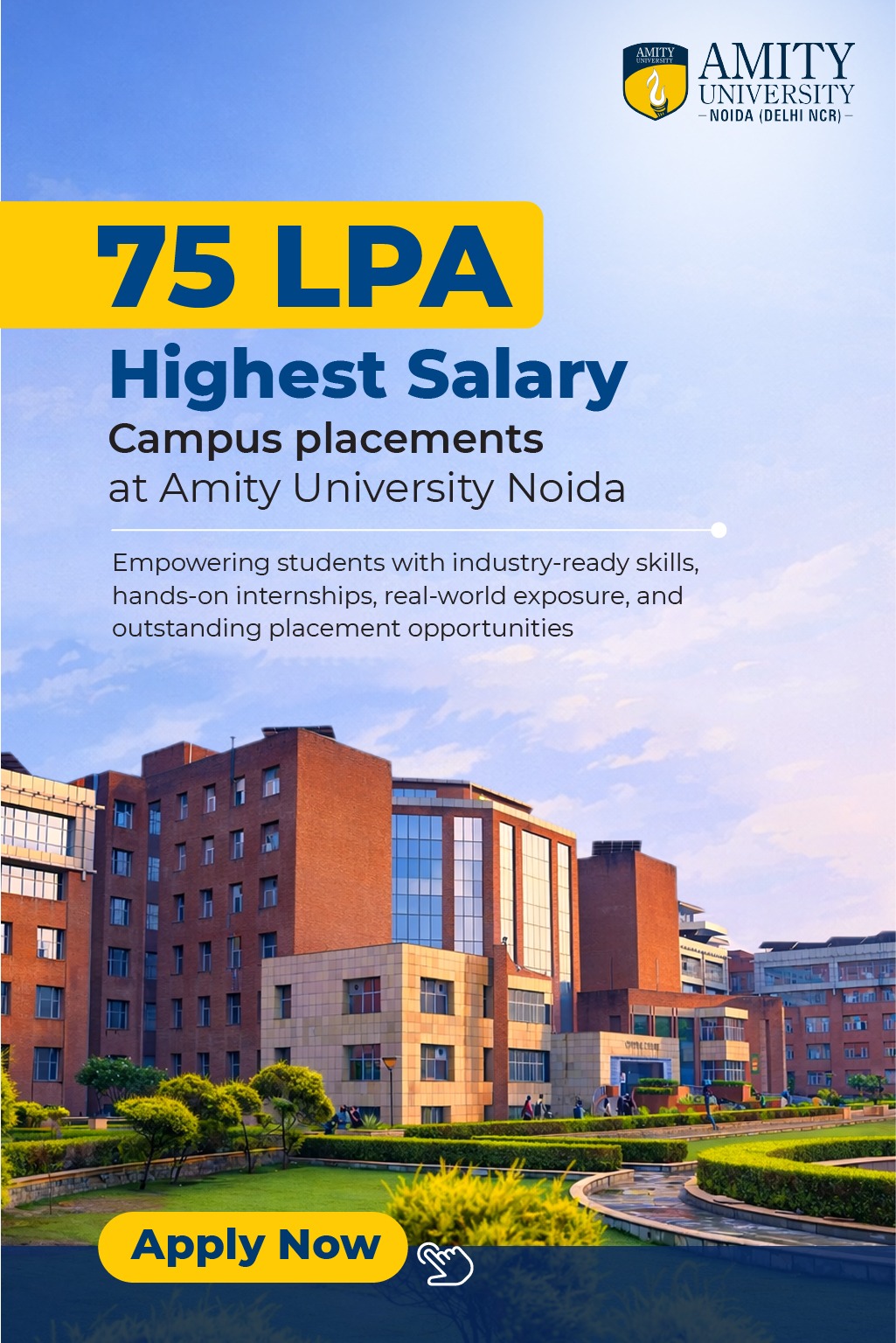
Placements: Amity’s placements create benchmarks every year from garnering Rs 2 crore annual job package to placement in 500 corporates in campus recruitment including top Fortune 500 employers.
These days, user experience design is solving problems and creating more accessibility while riding the AI wave. The future in this field is bright.



Amity University Noida's Official Blog: Your Destination for Career Guidance, Course Insights, Rankings, and Expert Tips for a Future Full of Possibilities.
Contact us: admissions@amity.co.in