From Script to Screen: How Film Students Bring Stories to Life
31-03-2026

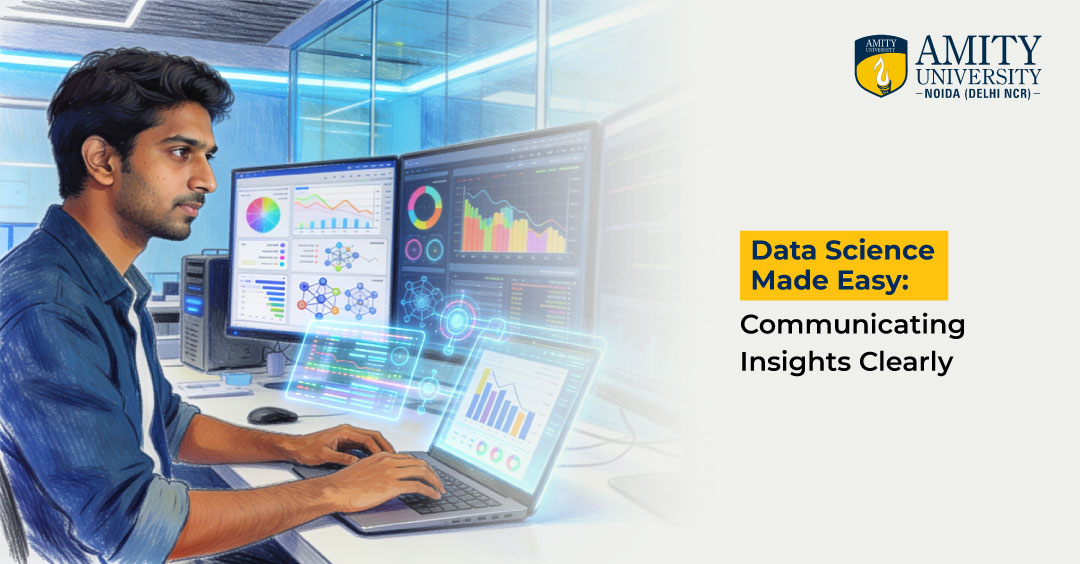
A decade ago, nobody would have imagined their grandma making digital payments or ordering Alexa to play her favourite song. That’s data science, simplified. Non-tech roles with data skills, like digital marketers, have 20–30% higher salary bump, compared to others. That’s why understanding data science is critical for a safer future.
You don’t have to be a tech genius to understand data science or its usage. That’s why tech professionals and organisations are stepping up to help non-techies scale this challenge.
According to NASSCOM, at least data literacy for non- IT roles is prioritised by 60% Indian companies. Some leading sectors include banking, healthcare and retail.
These days, organisations are dumping manual tasks and roles in favour platform consolidation and scaling. They’re rethinking their data ecosystems and expectation everything and everyone--technical and non-technical-- to be seamlessly connected. Here’s why understanding data science helps:
Leads to better decision-making
Future-proofing skills
Job security and scaling career
This B.Tech in Computer Science and Engineering degree offers a strong foundation in computer science with a focused specialisation in data-driven technologies. For students exploring what is data science engineering, this undergraduate programme combines core computing principles with advanced analytical methods used to extract insights from complex data. The curriculum is structured to help learners understand what is the scope of data science and how data science supports decision-making across industries. Through this B.Tech in Computer Science and Engineering programme, students develop expertise in programming, data analytics, machine learning, and intelligent systems, preparing them for emerging careers in the digital economy.
The programme covers essential areas such as programming, engineering sciences, applied mathematics, data analytics, machine learning, and artificial intelligence. Students also develop communication and problem-solving skills through technical writing, presentations, and collaborative projects. The academic structure reflects key components of a standard B.Tech data science syllabus, supported by hands-on laboratory work and real-world case studies. This approach prepares students for emerging roles in analytics, AI, and data-centric engineering functions.
Students evaluating B.Tech in data science and engineering also look at long-term outcomes, including the scope of data science in the future and career growth across global technology markets.
Simplified Storytelling: Every number has a story. Use numbers and related graphs to explain trends, impact and other developments. Keep the narrative simple and engaging. Avoid jargons.
Diverse Interaction Modes: Arrange one-on-one interactions along with team meetings to build confidence of non-techies.
Use examples: Real time impact of data science on everyday life and relatable analogies, examples will make understanding data science easier.
Break concepts into chunks: You don’t want to bore your audience with endless content. Break concepts into in chunks.
Deploy Interactive Tools: If you want to make an impact and hold the target audience’s attention, then go for tools like Power BI, which helps non- tech pros understand data better.
Listen, Actively: Address all queries and understand the audience expectations to give customised responses.
A recent report by Gartner says that non-technical users will create 75% of new data integration flows in 2026. The reason? Language-based AI-driven tools. They translate natural language into SQL queries, automate data preparation, and provide intelligent recommendations.
Other reasons why organisations are heading for a data science boot camp:
It drives innovation and creativity
Competitive edge and faster decision-making are boosted
When non-techies learn data science, they reduce dependency on experts
Enhances employee upskilling and scales up collaboration
Enrol in simple online courses like Google Data Analytics certification, Excel and Power BI, Coursera
Your tool learning must expand to Google Sheets, Excel, Power BI, and SQL
Practice with real data sourced from various authentic links
Data Science isn’t just a skill. But the language of the future.




Amity University Noida's Official Blog: Your Destination for Career Guidance, Course Insights, Rankings, and Expert Tips for a Future Full of Possibilities.
Contact us: admissions@amity.co.in