From Script to Screen: How Film Students Bring Stories to Life
31-03-2026

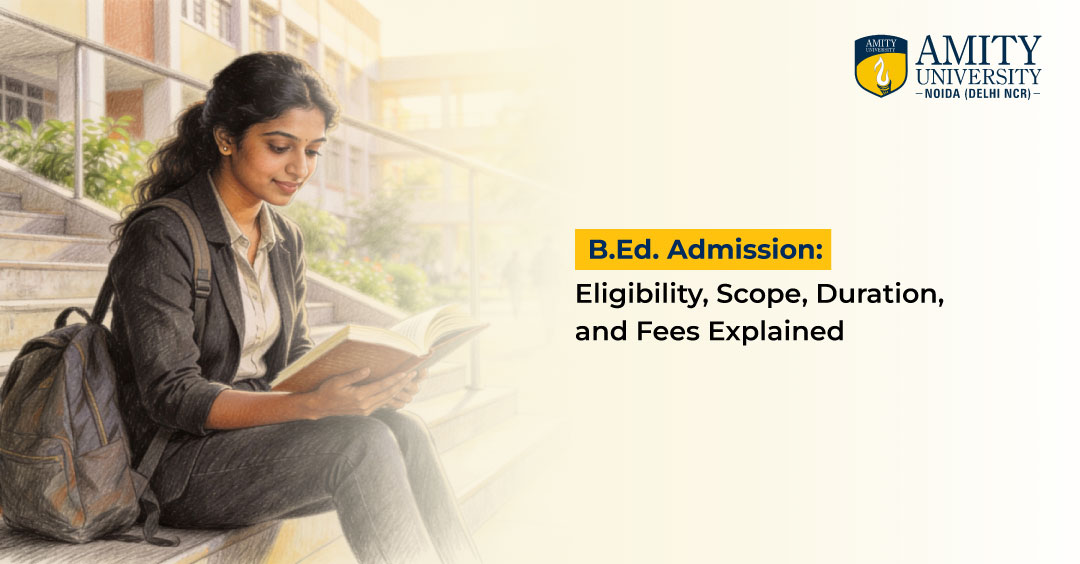
Admission for B.Ed. The program in 2026 is gaining popularity among those students who dream of making their careers in the fields of teaching, education administration, and curriculum planning. With the growing emphasis of schools on well-trained teachers who have an understanding of contemporary methods of teaching, the Bachelor of Education (B.Ed.) is one of the most reputable qualifications within the education field.
A B.Ed. course offers aspiring teachers all the necessary pedagogy skills, classroom management, knowledge of child psychology, evaluation skills, and practical knowledge of teaching. No matter whether your dream is to teach at schools, take up government teacher exams, or join any educational institutions in the capacity of administrative officers, a B.Ed. will come to your great assistance.
This guide covers everything that is required to be known about B.Ed. admissions in 2026.
Bachelor of Education (B.Ed.) is a teacher training program that is meant to produce graduates who would go on to work as teachers in schools. Topics covered in the program include:
Psychology of education
Methods of teaching
Classroom management
Assessment and evaluation
Curriculum development
Educational technology
School-based training or internship
The program ensures that aspiring teachers know how learners learn and how teaching approaches may be modified accordingly.
B.Ed. Admission 2026: Key Highlights
|
Particulars |
Details |
|
Course Name |
Bachelor of Education (B.Ed.) |
|
Course Level |
Professional Degree |
|
Duration |
Typically 2 Years |
|
Eligibility |
Bachelor's or Master's Degree from a recognized university |
|
Admission Process |
Merit-Based or Entrance-Based |
|
Average Fee Range |
₹30,000 – ₹3,00,000+ (varies by institution) |
|
Career Paths |
Teacher, Academic Coordinator, Education Consultant, Content Developer |
|
Higher Studies |
M.Ed., MA Education, PhD, Educational Research |
Eligibility requirements may vary slightly across universities, but the general criteria remain similar. Candidates should have:
A Bachelor's degree from a recognized university, or
A Master's degree in a relevant discipline
Minimum qualifying marks as specified by the institution
Many institutions require around 50% aggregate marks in graduation or post-graduation, although requirements can vary depending on university policies and reservation categories.
Class X mark sheet
Class XII mark sheet
Graduation mark sheets and degree
Identity proof
Passport-size photographs
Migration/Transfer Certificate (if applicable)
The admission process generally follows these steps:
Step 1: Application Process- The applicants need to apply through an online application form and submit the documents.
Step 2: Verification of Eligibility- The university checks the eligibility criteria of the candidate.
Step 3: Entrance Examination/ Merit- Based on the university, the criteria for admission can be any one or more of the following:
Entrance Examination scores
Merit
Interview
Step 4: Counseling & Admission- The candidates go through counseling and documentation for admission.
The usual B.Ed program in India is usually delivered as a professional degree course of two years, split into four semesters. It involves theory, practical sessions, internship periods, and on-the-job school teaching experience.
The students get real exposure to the classroom through their teaching practice and planning lessons, bridging the theoretical aspect with practicality.
While the syllabus differs among universities, most programmes include the following areas:
|
Core Subjects |
|
Childhood and Adolescent Development |
|
Learning and Teaching |
|
Contemporary Education |
|
Assessment for Learning |
|
Assessment for Learning |
|
Educational Technology |
|
Language Across Curriculum |
|
Pedagogy of School Subjects |
|
School Internship |
|
Classroom Practice and Observation |
Modern B.Ed. Programmes increasingly incorporate digital learning tools, educational technology, and learner-centric teaching approaches.
The education sector continues to create opportunities for qualified teachers and education professionals. A B.Ed. degree opens doors to both teaching and non-teaching roles.
After completing a B.Ed., graduates can pursue roles such as:
Primary School Teacher
Secondary School Teacher
Senior Secondary Teacher
Special Educator
Subject Matter Expert
Candidates seeking government teaching positions may also need to qualify for examinations such as CTET or state-level Teacher Eligibility Tests (TETs).
The degree can also lead to opportunities in:
Academic Coordination
Educational Administration
Curriculum Development
Educational Content Creation
E-learning Organizations
Training and Development
Students interested in advanced studies can pursue:
Master of Education (M.Ed.)
MA in Education
Educational Research Programmes
PhD in Education
Salaries vary based on location, institution type, experience, and qualifications.
|
Job Role |
Approximate Starting Salary |
|
School Teacher |
₹3–6 LPA |
|
Senior Secondary Teacher |
₹4–8 LPA |
|
Academic Coordinator |
₹5–8 LPA |
|
Educational Consultant |
₹4–10 LPA |
|
Content Developer (Education) |
₹4–7 LPA |
With experience, additional certifications, and leadership responsibilities, compensation can grow substantially.
Amity University Noida provides a two-year B.Ed. programme, which aims to train future educators through a blend of academics, pedagogy, and practical teaching experience. This programme is provided by an institute that is recognized by NCTE. The institute provides training related to professional teaching skills, classroom involvement, educational psychology, and school internships.
Key features include:
Structure of two-year B.Ed. programme
The selection process involving personal interviews
Classroom teaching and school internship orientation
Training in areas of child development and education
Familiarization with current methods of teaching
Study atmosphere supplemented by academic and institutional support
The teaching education at Amity University Noida is oriented towards producing educators who can keep up with changing educational requirements.
B.Ed. Fees vary considerably depending on the university, infrastructure, location, and facilities offered.
|
Institution Type |
Approximate Fee Range |
|
Government Colleges |
₹30,000 – ₹1,00,000 |
|
Private Colleges |
₹80,000 – ₹3,00,000+ |
|
Premium Private Universities |
₹1,50,000 – ₹4,00,000+ |
The B.Ed. Admission 2026 provides a great chance to those individuals who have decided to be a part of the education industry and create the future generation of this country. This course will provide a comprehensive understanding of the techniques of teaching, learning psychology, class management, and educational practice, along with practical experience through internships and training in schools.
No matter if you want to become a school teacher, academic coordinator, curriculum developer, or an educationist, you will need a B.Ed. A degree that will enable you to have knowledge and skills in your field of profession. It will not only improve your career but will also help you grow in your career.




Amity University Noida's Official Blog: Your Destination for Career Guidance, Course Insights, Rankings, and Expert Tips for a Future Full of Possibilities.
Contact us: admissions@amity.co.in