Imagine a career with mind-bending skills that promises science fiction-worthy thrills. These days, a degree in B.Tech Aerospace Engineering and B.Tech Avionics is trailblazing new careers. From designing next-gen aircraft to mastering and creating new-age aviation tech, these courses are turning science fiction into jaw-dropping reality.
B.Tech Aerospace Engineering
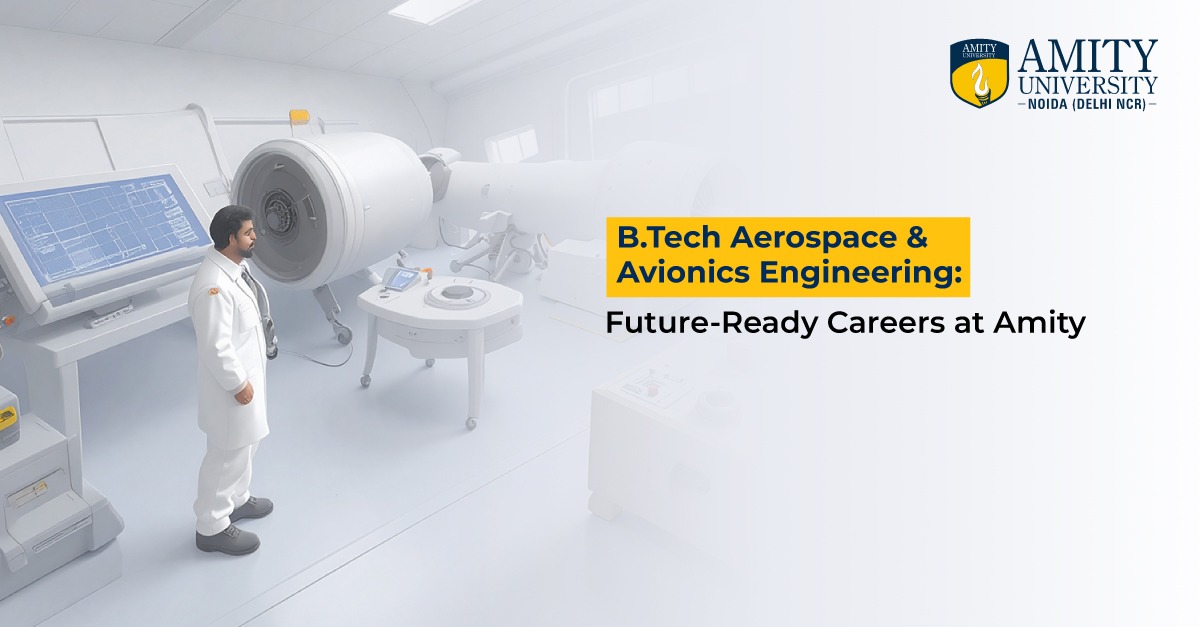
B.Tech in Aerospace Engineering is an undergraduate program designed to provide students with a solid foundation in the design, development, and maintenance of aircraft and spacecraft. The curriculum covers key areas such as aerodynamics, propulsion systems, flight mechanics, avionics, and aerospace materials. Students gain hands-on experience through laboratory work, design projects, and internships, applying theoretical knowledge to real-world challenges in aerospace technology.
The program prepares graduates for careers in the aerospace, defence, and aviation industries, equipping them with the skills to contribute to innovations in aircraft and spacecraft design, manufacturing, testing, and maintenance on a global scale.
Duration: 4 Years
Eligibility
60% in class X & XII and 60% in PCM for the Non-sponsored category.
Eligibility will be relaxed by 5% for the Sponsored category.
B.Tech Avionics
B.Tech (Avionics) is an advanced undergraduate program focusing on electronics systems used in aerospace engineering, including navigation, communication, and control systems essential for aircraft and spacecraft operations. The course covers key areas like aircraft systems, navigation, communication systems, radar technology, and control systems, providing a deep understanding of how electronics and avionics work in modern aircraft. Students gain practical skills through hands-on training, laboratory work, and industry exposure, preparing them for roles in the aerospace and aviation sectors.
Graduates are equipped to design, develop, and maintain the sophisticated avionics systems that power aircraft, offering them diverse career opportunities in aviation companies, defence, and research institutions.
Duration: 4 Years
Minimum Eligibility
For Non-Sponsored: Class (X & XII) agg. 60% with (PCM) min. 60%
For Sponsored: Class (X & XII) agg. 55% with (PCM) min. 55%
New Age Careers
Besides well-known careers like Avionics Engineer, Defence Researcher, Aerospace Engineer and others, there’s a slew of new careers in this field. These include:
- Space Technology Engineer: Aerospace engineers with expertise in satellite and launch systems.
- AI/ML Engineer in Aerospace Applications: Uses avionics knowledge to develop AI flight systems and maintenance algorithms.
- Drone Technology Specialist: Uses his aerodynamics knowledge to devise drone designs, avionics integration and more.
- Sustainable Aviation Engineer: Skilled at developing green energy-powered aviation technologies.
- Digital Twins Engineer (Aerospace): Creates virtual replicas of unmanned aerial vehicles, aircraft, drones and other systems for design and predictive maintenance.
Extra Edge: Amity Institute of Space Science & Technology
- Study Abroad: BTech Avionics offers 5 weeks Study Abroad Program (SAP) at Amity Campuses in London, New York and Singapore, focused on imparting International exposure at no additional tuition fee.
- Cutting Edge Tech Labs: Aircraft Structures laboratory and Vibrations Laboratory at AIAE to impart practical skills to students to analyse stress and strain in aircraft components through photo elastic bench. Interdisciplinary labs also available.
- Aerodynamics Lab: Equipped with a subsonic wind tunnel and smoke tunnel, provides opportunities to study aerodynamic characteristics & flow patterns on different aerofoils, circular cylinder and aircraft test models.
- Industry relevant curriculums: Trending careers, new roles and futuristic skills are a part of the curriculum. Here, real-world communication is imparted creatively.
- AI-Powered Career Discovery Platform: From mock interviews and resume building to job search and easy-apply tools — our AI-powered platform ensures you’re career-ready.
- Finding the right fit: Expert led webinars, finding the right internship based on student aspirations, talent and networking are some of the pivotal aspects of the Amity placement cell.
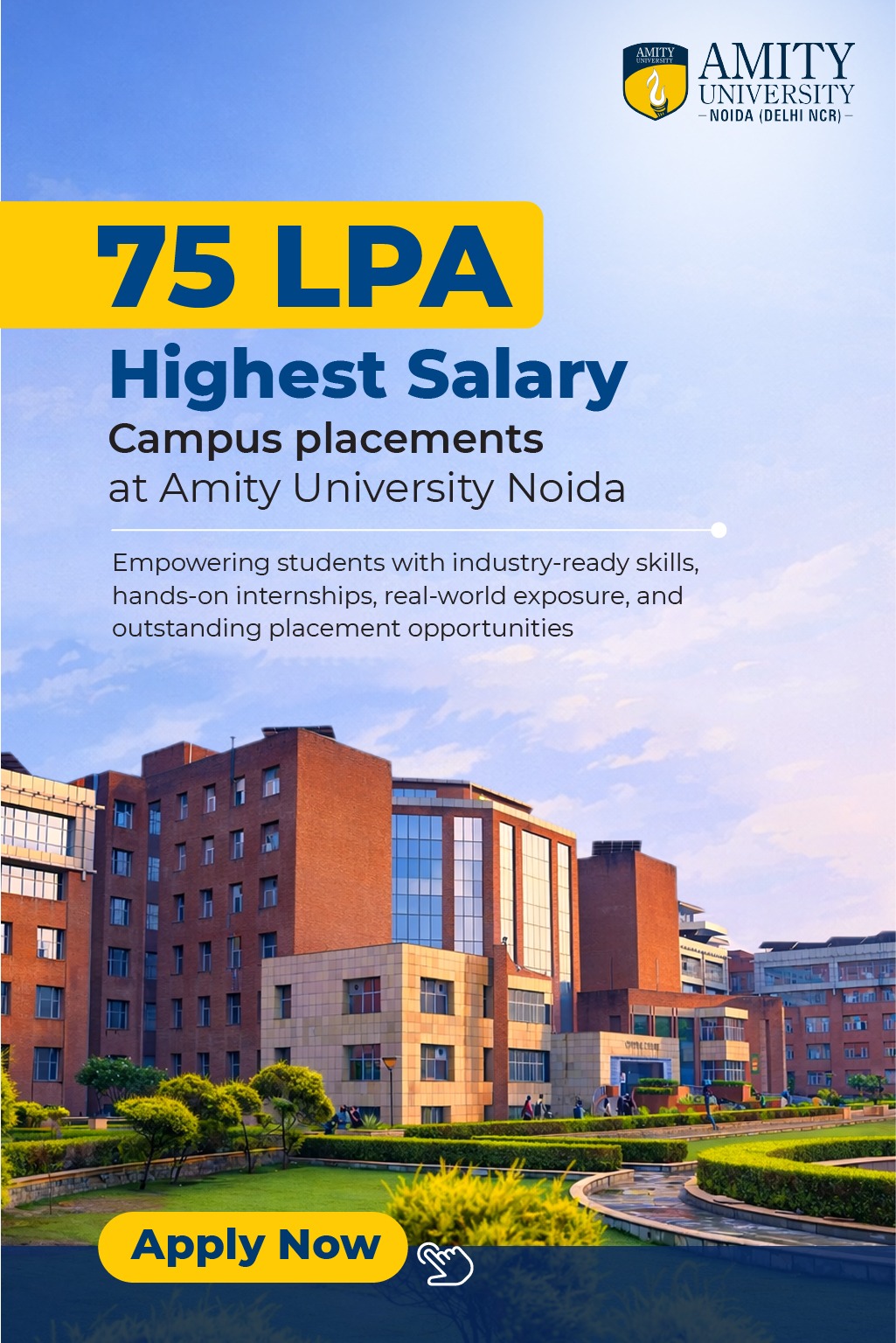
- Placements: Amity University Noida placements create benchmarks every year from garnering Rs 2 crore annual job package to placement in 500 corporates in campus recruitment including top Fortune 500 employers.
FAQs
1. What is the difference between B.Tech (Avionics) and BTech Aerospace programs?
While BTech Avionics focuses on designs of aircrafts and propulsion systems, BTech Aerospace specialises in electronic systems of an aircraft like navigation, flight control, communication.
2. What are the skills gained with BTech Avionics?
Students gain expertise in radar systems, digital avionics, signal processing, data science, embedded systems, and aerospace communication, preparing them for cutting-edge roles in avionics.
3. Can I switch from Aerospace to Avionics or vice versa, after completing my BTech degree?
Yes. Both fields overlap with each other and even organisations in this field work on cross-disciplinary skills. You can choose to specialise in a particular area to enhance your career.
4. What skills are gained with BTech Aerospace Engineering?
You will learn about flight mechanics, aircraft structures, aerodynamics and propulsion.
5. What are the salary trends in these fields?
Freshers can begin with a package of INR 6-16 LPA and scale up to INR 16-25 LPA or more, in the later years.