Design today shapes how we live, shop, communicate, and experience the world. From the layout of a mobile app to the structure of a retail store, design influences decisions in ways that often go unnoticed. As industries become more competitive and user-focused, the demand for trained design professionals continues to grow.
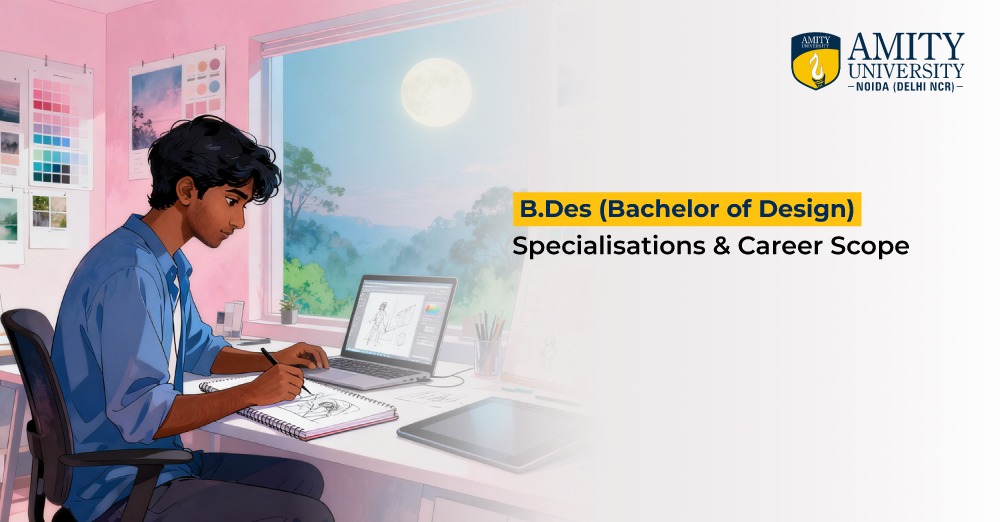
A Bachelor of Design, commonly known as B.Des, has emerged as one of the most sought-after undergraduate programs for students who wish to build a creative yet structured career.
What is the Bachelor of Design (B.Des) Course?
The full form of
B.Des is Bachelor of Design. It is an undergraduate degree focused on creative thinking, visual communication, product development, and user-centred innovation.
Design education combines artistic expression with practical problem-solving. Students are trained not only to create visually appealing work but also to understand user behaviour, market trends, and technological tools.
In modern industries, design is no longer limited to aesthetics. It drives branding, customer experience, digital engagement, and product functionality. Companies rely on designers to build identity, usability, and emotional connection with consumers.
Why is the Bachelor of Design Becoming a Popular Course After 12th?
Several factors have contributed to the rising popularity of the Bachelor of Design program:
Growing demand for creative professionals
Businesses now compete on experience and innovation. Skilled designers help companies stand out in crowded markets.
Expansion of design-driven industries
Fashion, media, gaming, digital marketing, e-commerce, and technology sectors are expanding rapidly and require trained designers.
Role of design in business and branding
Design plays a central role in brand identity, packaging, advertising campaigns, website interfaces, and customer interaction.
Students who wish to combine creativity with structured learning often see B.Des is a strong alternative to conventional career paths.
What Is the Eligibility and Admission Process for the Bachelor of Design?
Academic Eligibility
Most institutions require students to have completed Class 12 from a recognised board. Streams may vary, though some universities prefer candidates with a background in arts or design-related subjects.
Entrance Exams
Admission may involve national or university-level entrance tests that assess creativity, visual aptitude, logical reasoning, and general awareness.
Portfolio and Creative Assessment
Many institutions evaluate portfolios and conduct personal interviews or studio tests. This process helps assess originality, drawing skills, and design thinking ability.
What Is the Course Duration and Structure of B.Des Program?
Course Duration
The B.Des program is typically a four-year undergraduate degree divided into eight semesters.
Semester-Wise Structure
The initial semesters focus on design fundamentals and foundation subjects. Later semesters move towards specialisation and advanced studio work.
Studio Projects and Practical Training
Studio-based learning is central to design education. Students work on live briefs, case studies, internships, and collaborative projects. Practical exposure strengthens both technical skill and professional confidence.
What Subjects Are Covered in the Bachelor of Design (B.Des) Syllabus?
The Bachelor of Design subjects are structured to balance creativity, technology, and practical application. The B.Des syllabus evolves with industry trends, ensuring students remain relevant.
What Core Design Subjects Do Students Study?
Design Fundamentals
Principles of colour, composition, form, and space.
Visual Communication
Typography, layout design, storytelling through visuals.
Creative Problem Solving
Design thinking, research methods, concept development.
These core B.Des subjects lay the foundation for all specialisations.
What Technical and Digital Design Subjects Are Included?
Design Software and Tools
Training in industry-standard digital tools for graphics, modelling, and interface design.
Digital Media and Graphics
Animation basics, motion graphics, digital illustration.
Product and User Experience Design
Understanding usability, ergonomics, and interaction design.
Technical proficiency ensures graduates are prepared for digital-first workplaces.
How Do Practical Projects and Studio Learning Help Design Students?
Studio learning bridges theory and real-world application. Students receive feedback from faculty and industry mentors, refine concepts through iteration, and build professional portfolios. This process helps them graduate with demonstrable work rather than only theoretical knowledge.
What Is the Career Scope After Bachelor of Design?
Corporate Design Careers
Roles in branding, product development, marketing design, and digital strategy.
Creative Industry Careers
Opportunities in fashion houses, design studios, advertising agencies, and production companies.
Freelancing and Entrepreneurship
Many designers work independently, offering services across branding, digital design, and creative consulting.
Global Career Opportunities
Design skills are globally transferable. Graduates can pursue careers across international markets.
Which Industries Hire Bachelor of Design Graduates?
- Fashion and lifestyle brands
- Media and advertising agencies
- Product manufacturing companies
- Technology and digital firms
- Entertainment and animation studios
Design professionals are valued wherever innovation and user engagement matter.
What Is the Fee Structure of the Bachelor of Design Course?
Fees vary between government and private institutions. Government colleges generally offer lower tuition, while private universities may provide advanced infrastructure and global exposure.
Scholarships, merit-based concessions, and financial assistance programs are often available.
When assessing fees, students should consider long-term return on investment, portfolio development, internship opportunities, and placement support.
How Should Students Choose the Best College or University for B.Des?
Key factors include:
- Modern design studios and labs
- Industry exposure and internship tie-ups
- Strong placement record
- Experienced faculty with industry background
- Portfolio guidance and career mentoring
A well-equipped campus with strong industry connections, such as
Amity University Noida, often makes a measurable difference in career readiness.
What Are the Future Industry Trends Creating Demand for Design Professionals?
Growth of Digital and UI/UX Design
As businesses shift online, intuitive digital experiences are essential.
Expansion of Branding and Marketing Design
Strong visual identity remains central to competitive positioning.
Rise of Animation, Gaming and Multimedia
The entertainment and gaming industries continue to expand globally.
Increasing Demand for Product and Experience Design
Consumers expect functionality combined with a meaningful experience.
Designers who adapt to these evolving trends will remain in demand.
What Are the Key Takeaways About Bachelor of Design Course?
The Bachelor of Design program equips students with creative thinking, technical skills, and practical experience. It offers diverse specialisations, a wide career scope, and strong industry demand.
For students who are observant, imaginative, and willing to experiment, B.Des provides a structured path into dynamic industries where creativity meets strategy.
Frequently Asked Questions
1. What is the Bachelor of Design (B.Des) course?
It is a four-year undergraduate program focused on creative design, visual communication, and innovation across various industries.
2. What subjects are included in B.Des syllabus?
The B.Des syllabus includes design fundamentals, visual communication, digital tools, product design, user experience, and specialisation-specific subjects.
3. What career options are available after B.Des?
Graduates can work in fashion, graphic design, UI/UX, animation, product design, advertising, or pursue freelance and entrepreneurial ventures.
4. What is the eligibility for Bachelor of Design?
Students must complete Class 12 from a recognised board and may need to clear entrance exams and portfolio assessments.
5. Which is the best college for B.Des in India?
The best college depends on infrastructure, faculty expertise, industry exposure, and placement outcomes. Students should compare these factors carefully before making a decision.